Why Choose Exterior Windows for Your Building?
Why Choose Exterior Windows for Your Building?
Exterior windows do more than frame a view. They shape daylight, ventilation, comfort, and the building’s energy demand. The U.S. Department of Energy’s Energy Saver guidance estimates that heat gain and heat loss through windows account for 25%–30% of residential heating and cooling energy use. That figure is a useful warning, not a promise of identical savings for every building. Climate, orientation, installation, and existing insulation all matter.
Window researcher Dr. Dariush Arasteh of Lawrence Berkeley National Laboratory has emphasized a practical principle: evaluate the complete window system, not just its glass. The frame, glazing, seals, and installation work together. A low-emissivity coating may help, but a poorly sealed frame can still let cold air creep around the edges. Small details matter.
Choosing exterior windows is therefore a design and performance decision. The National Fenestration Rating Council’s certified ratings can help compare U-factor and solar heat gain coefficient across products. These numbers make specifications easier to check, though they cannot capture every site condition. No window fixes a weak wall by itself.
There is no perfect window. A large south-facing unit can brighten a room, yet increase summer heat without shading. This introduction explores how exterior windows can support comfort, efficiency, and architectural character—and where careful selection still needs sound installation and realistic expectations.
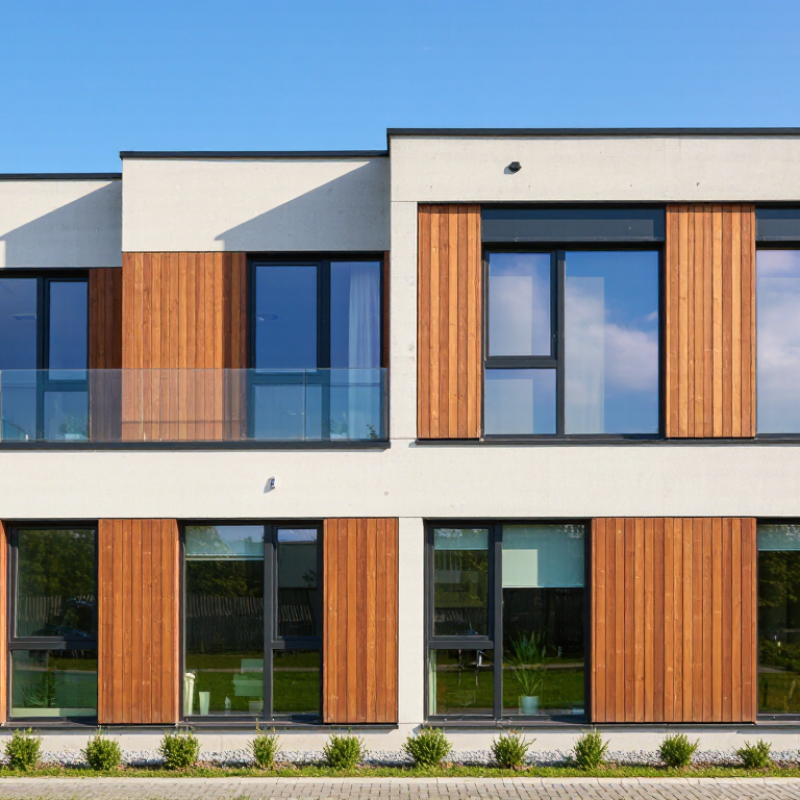
What Exterior Windows Are and How They Fit into Building Design
Why Choose Exterior Windows for Your Building?
What Exterior Windows Are and How They Fit into Building Design
Exterior windows are glazed openings in a building’s outer wall. They bring daylight and views indoors while helping manage weather, sound, and heat. Their role depends on more than the glass. Frame material, glazing layers, opening style, and installation details all affect performance. A narrow casement beside a kitchen counter behaves differently from a broad, fixed window facing afternoon sun.
Window placement should respond to room use and building orientation. South- and west-facing glass may admit strong sunlight, while shaded openings can provide softer light. The U.S. Department of Energy’s Energy Saver guidance estimates that windows account for 25–30% of residential heating and cooling energy use. That figure is a useful warning, not a promise of savings for every building. Climate, shading, air leakage, and occupant habits matter. A window can look right and still feel wrong.
Tips: Sketch the façade and mark sun direction before choosing sizes. Check how each opening affects furniture, privacy, ventilation, and exterior water drainage. Daylight matters. Ask a qualified designer or installer to review the wall assembly and glazing options. Small details count. Even a carefully selected window may underperform if its perimeter is poorly sealed.
Why Choose Exterior Windows for Your Building?
Exterior windows shape a building’s façade while bringing in daylight and views. Their glazing also affects heat transfer: a lower U-factor means better insulation.
Approximate center-of-glass U-factors in W/m²·K. These representative values vary by product and do not describe the complete window, whose frame and spacer also affect performance.
Key Types and Materials Used in Exterior Windows
Exterior windows are not one standard product. Their operation and frame material affect daylight, ventilation, maintenance, and heat flow. Casement windows hinge outward and seal tightly when closed, while sliding units suit wide openings where swing space is limited. Awning windows can admit air during light rain. Fixed windows provide views and daylight, but cannot ventilate. Details matter.
Frame materials bring different trade-offs. Vinyl needs little upkeep and resists moisture, though dark finishes may be less suitable in strong sun. Aluminum is slim and durable; thermal breaks help reduce heat transfer through its conductive frame. Wood offers a warm interior finish but needs regular protection from moisture. Fiberglass is dimensionally stable, though product options and costs vary. No frame is perfect.
Glass and installation matter as much as the frame. The U.S. Department of Energy’s Energy Saver guidance estimates that windows account for 25–30% of residential heating and cooling energy use. That figure is not a guarantee for every building; climate, shading, and air leakage change results. Check the National Fenestration Rating Council label for independently rated U-factor and solar heat gain coefficient. Then match those ratings to local conditions. A high-performance window can still disappoint if the opening is poorly flashed or sealed. The awkward detail is often the important one.
How Exterior Windows Affect Light, Ventilation, and Views
Why Choose Exterior Windows for Your Building?
How Exterior Windows Affect Light, Ventilation, and Views
Exterior windows shape how a room feels throughout the day. A south-facing window may bring in warm afternoon light, while a shaded opening can provide softer illumination. Window size matters, but placement matters too. A broad window can look generous on a plan, yet cause glare on a computer screen. That matters.
Ventilation depends on more than having operable windows. Openings on different sides of a room can help air move through, while one small window may offer limited airflow. Local wind patterns, nearby buildings, and insect screens can all affect performance. In practice, even a well-placed window may stay closed if outside noise or poor weather makes it uncomfortable to use. Not always.
Views influence comfort and privacy. A window facing trees may make a compact room feel more open; one facing a busy walkway may need careful positioning or screening. Sill height can preserve a seated view, while higher glazing can admit daylight without exposing the room as much. Consider how the room will be used at different hours, not just how it looks in a rendering. The balance is rarely perfect: more glass can improve daylight and views, but it can also increase glare and heat gain.
Energy Efficiency, Weather Protection, and Building Performance
Why Choose Exterior Windows for Your Building?
Exterior windows influence energy use, weather resistance, and everyday comfort. The U.S. Department of Energy’s Energy Saver guidance estimates that heat gain and loss through windows account for 25–30% of residential heating and cooling energy use. That figure describes homes, not every commercial building, but it shows why glazing choices deserve attention. Low U-factors limit heat transfer, while an appropriate solar heat gain coefficient can reduce unwanted summer heat without making useful daylight disappear.
Look beyond the glass. The National Fenestration Rating Council’s performance ratings report U-factor and solar heat gain coefficient, helping teams compare products using consistent measures. Frames, seals, flashing, and installation also matter: a high-performing unit can still leak air or water if the perimeter is poorly detailed. On a windy, rainy day, that weakness may show up as a cold draft near the sill or moisture on the interior trim. Small details count.
Good exterior windows can support steadier indoor temperatures and reduce strain on heating and cooling equipment. They also help protect finishes and occupied spaces from drafts and water intrusion. Yet performance is not automatic. Climate, orientation, shading, and maintenance change the outcome. Specifications look neat on paper; installation is messier. A practical review should check ratings, drainage paths, sealant joints, and how occupants actually use blinds and operable sashes.
Factors to Consider When Choosing Exterior Windows
Why Choose Exterior Windows for Your Building?
Factors to Consider When Choosing Exterior Windows
Choosing exterior windows begins with the building’s climate, orientation, and purpose. A south-facing room may need stronger solar control than a shaded hallway. In colder areas, low heat transfer and tight seals can reduce drafts near seating or workspaces. Check the window’s published thermal ratings, but compare them with local conditions. Numbers alone can be misleading.
Glazing affects comfort, daylight, noise, and energy use. Double or triple glazing may help in demanding climates, while laminated glass can reduce outside noise. Frame materials also differ in upkeep, insulation, and resistance to moisture. A coastal building, for example, faces salt and wind that can wear finishes faster. Small details matter. Consider how often the frames will need cleaning or repainting.
Installation deserves equal attention. Even a well-rated window can leak if the opening is poorly measured or sealed. Ask how flashing, drainage, and air sealing will be handled, and confirm that the design suits the existing wall. Still, specifications can look reassuring on paper and disappoint in a drafty room; a site assessment may reveal issues that product data cannot. Check safety glazing requirements and opening limits with a qualified local professional before finalizing the design.


 Get a Free Quote
 See our Doors





 Start your estimate