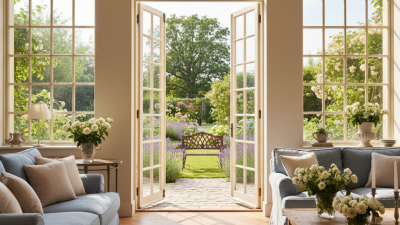
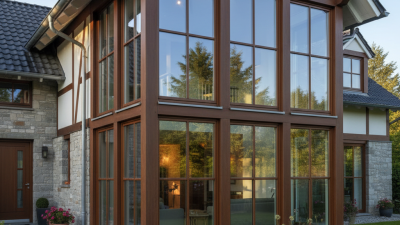
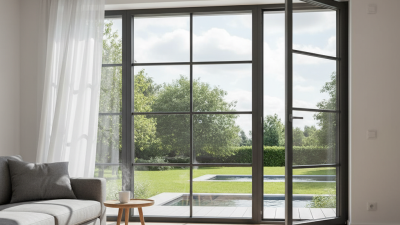
China has become an important sourcing base for German style windows, serving residential, commercial, and renovation projects worldwide. Buyers now expect more than attractive profiles. They examine thermal performance, air tightness, hardware durability, glass configuration, factory control, and export experience. A polished catalogue is not enough.
Ludwig Mies van der Rohe, a German-American architectural authority, said, “God is in the details.” Although he was not a window manufacturer, his principle remains highly relevant. Small details matter, including gasket compression, drainage paths, corner welding, handle quality, and installation tolerances. These elements can influence comfort, maintenance, and long-term energy use.
This guide introduces leading Chinese manufacturers associated with german style windows. It considers product design, material choices, testing practices, customization, production capacity, and communication with global buyers. Some suppliers offer German-inspired appearance without matching genuine German engineering standards. That difference deserves careful attention. Product claims should be checked through test reports, project references, factory audits, and clear warranty terms.
Experience also shows that the lowest quotation can become expensive. Weak packaging, unclear drawings, or unsuitable hardware may create problems after shipment. Even experienced buyers can overlook regional wind loads or installation habits. Therefore, this overview is a practical starting point, not a final purchasing decision. Readers should compare evidence, ask precise questions, and inspect samples before approving large orders.
China Top German Style Windows Manufacturers for Global Buyers
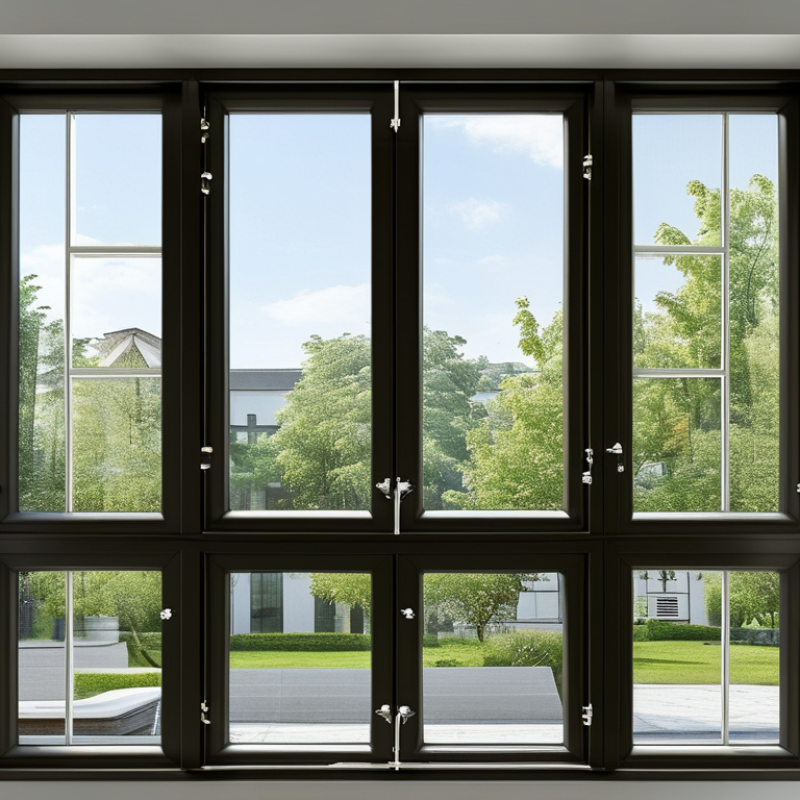
German-style windows are typically inward-opening tilt-and-turn systems. One handle controls two positions: full ventilation or limited top-hung airflow. This structure supports safer daily ventilation, especially in apartments and rainy climates. A reinforced frame, multi-point locking, continuous gaskets, and insulated glass work together. The window is not just glass.
Thermal performance depends on the complete unit. Frame material, spacer design, glass coating, and installation all influence the final U-value. The Passive House Institute uses Uw ≤ 0.8 W/m²K as a high-performance reference for certified windows. It is a benchmark, not a universal legal requirement. UNEP’s 2023 Global Status Report states that buildings consume about 34% of global energy and produce around 37% of energy-related and process emissions. Better windows can reduce heat loss, but only when walls and ventilation are also considered.
Acoustic control needs careful testing. Laminated glass, different glass thicknesses, and tight seals can improve indoor comfort near busy roads. EN 14351-1 and ISO 10077-1 provide useful frameworks for product performance and thermal calculation. Still, laboratory figures may disappoint on site. Poor measuring, weak anchoring, or careless sealing can create drafts around an excellent frame. Global buyers should request tested Uw, air permeability, water tightness, wind resistance, glass specifications, and installation details. Numbers help. They do not replace inspection.
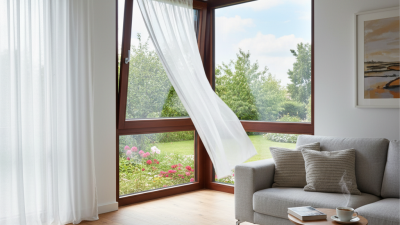
Evaluating Chinese German-style window manufacturers requires more than comparing catalogue prices. Start with the factory, not the sales office. Ask for production photos, equipment lists, and recent project references. A reliable supplier should explain profile thickness, thermal breaks, glazing options, drainage design, and hardware performance clearly.
Request physical samples before placing a large order. Check corner joints, gasket contact, handle movement, and frame alignment. Measure the sample carefully. Small gaps often reveal weak assembly control. Review test reports for air tightness, water resistance, wind pressure, insulation, and sound reduction. Reports should identify the tested product configuration, laboratory, date, and applicable regional standard. Generic certificates are not enough.
Factory visits can expose practical details. Watch how workers store glass, protect finished frames, and record inspection results. Ask how defects are handled, not only how they are prevented. Confirm packaging methods, loading photos, spare parts, replacement procedures, and warranty responsibilities in writing. Experienced manufacturers usually provide drawings, installation guidance, and predictable communication during changes. Yet even a well-organized factory may make mistakes. I would not rely on promises alone. Approve a production sample, maintain a clear inspection checklist, and use independent inspection when the order is important. A lower quotation may become expensive after poor sealing, damaged glass, or delayed replacements.
| Evaluation Dimension | Practical Buyer Benchmark | Evidence to Request | Rating Guide |
|---|---|---|---|
| German-Style Product Configuration | Tilt-and-turn opening, inward sash operation, multi-point locking, adjustable hinges, and continuous perimeter seals. | Section drawings, hardware schedule, opening samples, installation instructions, and a video showing both tilt and turn functions. |
Strong Complete tilt-and-turn system with documented hardware specifications. Weak Conventional casement window marketed only as “German style.” |
| Thermal Performance | Request whole-window Uw values rather than frame-only values. A practical export target is approximately ≤ 1.3 W/m²K for high-performance double glazing and ≤ 0.8 W/m²K for many triple-glazed configurations, subject to size and configuration. | EN ISO 10077 calculation, accredited laboratory report, glass specification, spacer type, frame profile details, and declared Uw for the actual model. |
Strong Whole-window result supplied for the quoted dimensions. Weak Only center-of-glass or profile U-value is provided. |
| Air Permeability | Class 4 under EN 12207 is the highest air-permeability classification commonly used for tested windows and is a suitable target for energy-efficient tilt-and-turn products. | Test report identifying the exact product family, test size, test pressure, laboratory, and classification according to EN 12207. |
Strong Class 4 with a traceable report. Weak “Airtight” claim without a classification or test document. |
| Water Tightness | For many exposed building applications, target at least Class 8A or higher under EN 12208; the required level depends on building height, façade exposure, and local weather conditions. | EN 12208 water-tightness report, test pressure, product dimensions, drainage design, gasket configuration, and sill details. |
Strong Class 8A or higher for the relevant configuration. Weak No test pressure or no product identification on the report. |
| Wind Resistance | Confirm the classification under EN 12210. A target such as Class C3–C5 may be appropriate depending on sash size, building height, exposure, and project location. | Wind-load calculation, EN 12210 test report, maximum sash dimensions, reinforcement details, and allowable deflection information. |
Strong Wind class matched to the project design loads. Weak A wind rating is quoted without test size or structural calculation. |
| Glass and Safety Options | Low-emissivity insulated glass, argon filling where specified, warm-edge spacer options, laminated safety glass, tempered glass, and acoustic glass should be available according to project requirements. | Glass make-up, thickness, gas-fill declaration, visible light and solar-factor data, safety-glazing marking, and insulated-glass-unit warranty terms. |
Strong Glass performance is documented separately from the frame. Weak Only “double glass” or “triple glass” is stated. |
| Profile and Reinforcement Quality | The quotation should identify frame material, wall thickness or structural design, reinforcement material, gasket system, drainage route, and profile depth. Specifications must match the tested product. | Profile cross-sections, material declarations, reinforcement drawings, batch records, and incoming-material inspection procedures. |
Strong Transparent profile and reinforcement documentation. Weak Generic profile photographs with no technical section. |
| Quality Management and Factory Control | An ISO 9001-certified quality system is useful, but it should be supported by documented inspections for cutting, welding or crimping, glazing, hardware installation, sealing, and final operation. | Current certificate scope, production-flow chart, inspection checklist, calibration records, non-conformance procedure, and recent internal quality records. |
Strong Certificate scope matches window manufacturing and is independently verifiable. Weak Certificate is expired, unrelated, or supplied without verification details. |
| Export Documentation and Compliance | The manufacturer should provide commercial invoice, packing list, country-of-origin information, product declarations where applicable, installation instructions, and documents required by the destination market. | Anonymized sample export file, declaration of performance when applicable, technical file index, labeling format, customs data, and destination-specific compliance checklist. |
Strong Documents are consistent with the ordered configuration and destination country. Weak Generic certificates cannot be linked to the quoted product. |
| Customization and Engineering Support | The supplier should support opening schedules, unusual sizes, corner units, fixed lights, French doors, screens, hardware colors, glazing options, and project-specific installation details. | Completed shop drawings, engineering review process, sample window approval procedure, tolerance schedule, and revision-control records. |
Strong Drawings are reviewed and approved before production. Weak Production begins from informal messages or unapproved sketches. |
| Packaging and International Shipping | Use protective corner guards, separators, moisture-resistant wrapping, stable pallets or steel racks, and clear identification for each opening. Shipping plans should account for glass protection and unloading conditions. | Packaging photographs, loading plan, container utilization estimate, damage-claim procedure, inspection checklist, and agreed Incoterms. |
Strong Packaging is tested or documented for long-distance handling. Weak Windows are packed without separation, labeling, or moisture protection. |
| Warranty and After-Sales Service | Obtain separate warranty terms for frames, insulated glass, hardware, finishes, and accessories. The agreement should define exclusions, response times, replacement procedures, and responsibility for installation-related issues. | Signed warranty document, spare-parts policy, service contact, claim form, response-time commitment, and examples of corrective-action reports. |
Strong Warranty terms are product-specific and enforceable. Weak Warranty is stated only as a general marketing promise. |
| Pre-Order Verification | Approve a physical sample or mock-up before mass production. Check dimensions, operation, drainage, gasket continuity, glass markings, surface finish, hardware adjustment, and packaging. | Signed sample-approval form, inspection photographs, dimensional report, approved color or finish sample, and final production checklist. |
Strong Sample approval is contractually linked to mass production. Weak The buyer relies only on catalogue images or digital renderings. |
German-style windows made in China should be judged by documented performance, not polished showroom samples. The U.S. Department of Energy reports that windows can cause 25–30% of household heating and cooling energy use. This makes air leakage and glass selection commercially important. Reliable factories normally follow EN 14351-1 and test air permeability, watertightness, and wind resistance under EN 12207, EN 12208, and EN 12210.
Material discipline matters. A suitable specification may include thermally broken aluminum, reinforced uPVC, triple insulating glass, low-emissivity coatings, argon filling, and warm-edge spacers. Factory inspectors should verify profile thickness, corner welding, drainage paths, hardware fixing, and gasket recovery. Small details matter. A weak drainage hole can damage an otherwise excellent window.
Quality control should include incoming-material checks, process inspections, and final laboratory testing. The International Energy Agency links building-envelope improvements with lower operational energy demand, but reported values depend heavily on installation quality. That is where many projects become less convincing. A factory may pass a sample test yet struggle with uneven wall openings or poor site sealing. Global buyers should request batch records, test reports, calibration certificates, and installation guidance. Random window sampling is wiser than trusting one perfect unit. Mistakes still happen. The useful question is whether the manufacturer detects and corrects them.
Representative thermal-transmittance benchmarks for commonly specified window materials and glazing systems
China’s German-style window manufacturers differ sharply in customization, pricing, and delivery control. Customization should begin with performance requirements, not catalog photographs. Specify frame depth, thermal transmittance, glass configuration, hardware, colors, screens, and opening direction. A credible supplier should provide drawings, test reports, and a physical sample before production.
Pricing needs careful comparison. A low quote can mislead. Ask whether it includes glazing, reinforcement, packaging, inspection, and export documentation. The World Bank’s 2023 Logistics Performance Index scored China at 3.7 and Germany at 4.1, highlighting the importance of shipment planning and destination handling. For standard projects, many factories quote 30–45 days after deposit and approved drawings. Complex colors, oversized units, or special glass may add two to four weeks. Delays happen. Build a buffer.
Export service often separates experienced manufacturers from capable fabricators. Confirm Incoterms, container loading plans, moisture protection, spare hardware, and after-sales response times. The European Commission’s 2024 recast Energy Performance of Buildings Directive increases pressure for efficient building envelopes, making verified U-values increasingly important for European buyers. Independent inspection remains worthwhile, even when factory photos look excellent. I would also compare the supplier’s packing method against the window’s actual size and weight, because a perfect product can arrive damaged through weak corner protection.
Choosing a Chinese supplier for German-style windows requires more than comparing catalog prices. Project teams should review thermal performance, air tightness, water resistance, and hardware durability. Ask for complete test reports, not isolated figures. Details matter.
A reliable manufacturer explains profile materials, glazing options, drainage design, and production tolerances clearly. For cold climates, request tested U-values for the complete window, not the glass alone. For coastal projects, confirm corrosion-resistant hardware and suitable surface treatments. Factory audits can reveal practical details, such as storage conditions, assembly cleanliness, and quality checkpoints.
Communication also affects project risk. Confirm shop drawing procedures, sample approval, packaging methods, and replacement policies before signing. A capable supplier should identify conflicts between local building codes and the proposed design. This is where many projects become difficult. A low quotation may exclude installation accessories, special finishes, or performance testing. Buyers should calculate the full delivered cost.
Inspection plans should cover random measurements, opening force, glazing alignment, and visible scratches. Photographs alone are not enough. Independent inspection adds confidence, although it also increases cost and scheduling pressure. No supplier is perfect. Even experienced teams can miss a small tolerance issue when deadlines become tight. Keep written records, approve one physical sample, and connect payment stages with measurable quality requirements.
Call us one of our 3 offices across Ontario, Canada
Thanks for contacting us!
We'll get back to you as soon as possible.