Top China Tilt Turn Windows Manufacturers and Suppliers?

China has become a major sourcing destination for tilt turn windows, offering broad product ranges, competitive pricing, and flexible customization. Manufacturers commonly supply aluminum, uPVC, and wood-aluminum systems for residential, commercial, and passive-house projects. Yet supplier quality varies considerably. A polished catalog does not always prove reliable engineering.

Dr. Wolfgang Feist, founder of the Passivhaus Institut, has stated, “The window is the weakest point in the building envelope.” This observation remains important when evaluating Chinese tilt turn windows. Buyers should examine Uw values, air-tightness results, water-tightness performance, hardware durability, and thermal-break design. Factory certifications matter, but independent test reports matter more. Ask for laboratory records, installation drawings, glass specifications, and warranty terms before comparing prices.

A dependable supplier should also explain practical details. Can the frame support triple glazing? Are replacement handles readily available? How are drainage channels protected during transport? What happens when a corner weld fails after installation? These questions reveal more than sales language. Requesting a physical sample is wise. Open it repeatedly. Check the locking points, gasket compression, handle movement, and frame alignment.

This overview will examine leading China tilt turn windows manufacturers and suppliers through product quality, customization capacity, export experience, testing evidence, and after-sales support. Some factories may offer excellent value, while others may require closer supervision. No shortlist is perfect. Project conditions, local climate, installation skill, and budget can change the final choice. Careful verification remains essential.
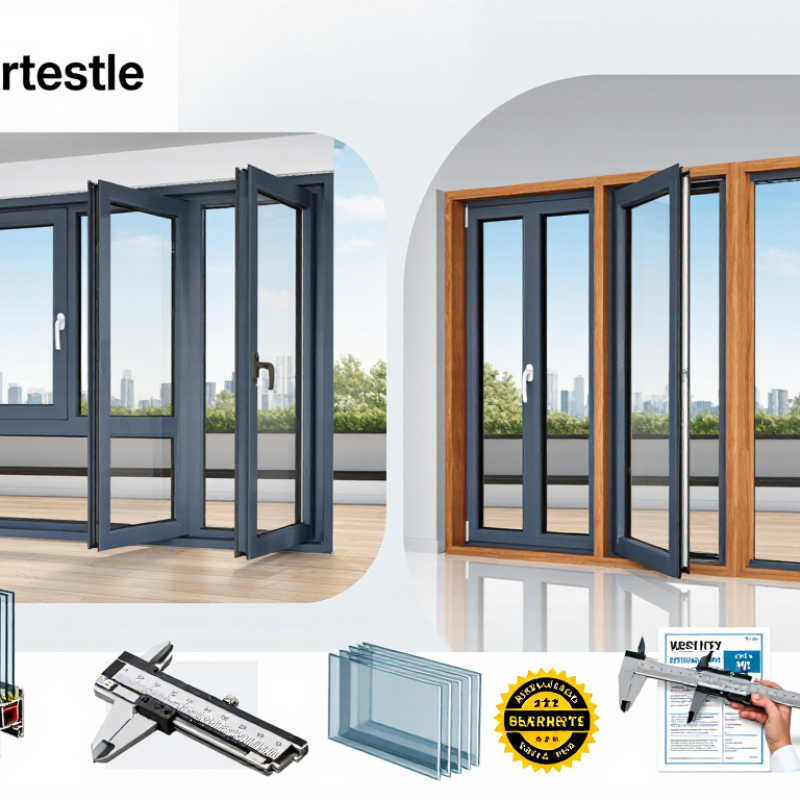
Top China Tilt Turn Windows Manufacturers and Suppliers?

What Are Tilt and Turn Windows?

Tilt and turn windows combine two opening functions in one sash. Turn the handle upward, and the top tilts inward for controlled ventilation. Rotate it sideways, and the sash swings inward like a casement window.

This design uses a hinge system, locking points, seals, and a reinforced frame. In daily use, the tilted position allows warm air to escape while limiting the opening. The full-turn position gives wider access for cleaning and stronger airflow. I have found this especially practical in apartments, kitchens, and upper-floor rooms. Still, poor adjustment can cause friction, uneven gaps, or difficult operation.

When evaluating Chinese manufacturers and suppliers, inspect more than appearance. Ask for frame-section drawings, hardware specifications, air-tightness results, and water-resistance test records. Check whether the supplier can match glazing thickness, drainage design, color finish, and local installation requirements. A reliable factory should explain tolerances clearly, provide sample units, and document quality checks during assembly. Some suppliers offer attractive prices but give vague answers about replacement hardware. That is a warning sign. Even a well-built window may perform poorly if the opening is measured incorrectly. Site conditions matter more than many catalogs admit. Request installation guidance, packaging details, and after-sales procedures before placing a larger order.


How Do Tilt and Turn Windows Work?

Top China Tilt Turn Windows Manufacturers and Suppliers

How Do Tilt and Turn Windows Work?

Tilt and turn windows use one sash with two opening positions. Turn the handle upward, and the top edge tilts inward slightly. This creates controlled ventilation while reducing rain entry. Rotate the handle sideways, and the sash turns inward from the side. The opening becomes wider for cleaning, emergency access, and stronger airflow.

Their hardware carries much of the performance. A perimeter locking system presses the sash against several sealing points. Compression gaskets then limit drafts, dust, and outdoor noise. The U.S. Department of Energy reports that windows can represent 25–30% of household heating and cooling energy use. Therefore, frame quality, glass selection, and installation deserve equal attention. A well-designed tilt and turn unit can help, but no window fixes a poorly sealed wall opening.

Tips: Check the window’s U-factor, solar heat gain coefficient, air-leakage rating, and test standard. Ask suppliers for laboratory reports, not only marketing claims. Measure the opening at several points, because masonry is rarely perfect. I have seen attractive samples fail after installation when drainage paths were ignored. That detail is easy to miss. Also inspect the handle movement, hinge alignment, and gasket contact before approving a large order. Data from the National Fenestration Rating Council can support fair product comparisons, but local climate and installation practice still affect real performance.

Top China Tilt and Turn Windows Manufacturers and Suppliers? — How Do Tilt and Turn Windows Work?

Tilt-and-turn windows use one sash with two operating functions. In the tilt position, the top of the sash moves inward slightly for controlled ventilation. In the turn position, the sash opens inward widely for stronger airflow, cleaning access, and emergency ventilation.

The chart shows representative operating angles commonly used in tilt-and-turn window hardware: approximately 15° for the ventilation tilt position and approximately 90° for the full turn position. Actual opening angles may vary according to the hardware system, sash size, and safety restrictors.

Key Features to Compare Among Chinese Manufacturers

When comparing Chinese tilt turn window manufacturers, begin with the frame, not the brochure. Ask whether profiles use thermally broken aluminum, uPVC, or a hybrid structure. Check wall thickness, reinforcement, drainage paths, and corner welding quality. A smooth sample may hide weak internal sections.

Glass specifications deserve equal attention. Compare double or triple glazing, low-emissivity coatings, spacer materials, and gas filling. Request documented air, water, and wind resistance results from recognized testing laboratories. Hardware should support both inward tilting and full turning without excessive force. Small details matter. Test the handle repeatedly.

Factory control often separates a dependable supplier from an attractive quotation. Review production photos, inspection records, packaging methods, and sample approval procedures. Ask how the manufacturer controls color consistency across large orders. Confirm tolerance standards before production begins. Also compare customization limits, replacement hardware availability, and communication during installation. I have found that clear drawings prevent more problems than friendly promises.

Lead time should include design confirmation, testing, production, and shipping preparation. A low price can become expensive when damaged corners or missing accessories delay installation. Request a complete quotation with glass, hardware, screens, packaging, and delivery terms listed separately. Visiting the factory can reveal practical habits, although one visit cannot prove long-term reliability. Keep questioning the evidence.

Top China Tilt Turn Windows Manufacturers and Suppliers? - Key Features to Compare Among Chinese Manufacturers

Comparison Dimension Typical Specification or Benchmark What to Compare Among Suppliers Recommended Evidence Importance
Window Configuration Tilt-and-turn operation with inward tilt ventilation and inward casement opening. Confirm the operating mode, opening direction, sash overlap, concealed or visible hardware, and emergency-release options. Approved drawings, operating sample, and hardware schedule. Essential
Frame Material Thermally broken aluminium, uPVC, timber, or timber-aluminium composite systems. Compare material grade, wall thickness, thermal-break design, reinforcement, surface treatment, and dimensional stability. Material certificates, profile cross-sections, and coating documentation. Essential
Thermal Performance Whole-window U-value commonly depends on frame, spacer, glazing, size, and installation; lower values indicate better insulation. Compare certified whole-window U-value rather than glass-only U-value, using the same window size and glazing build-up. NFRC, EN, ISO, or equivalent laboratory calculation or test report. Essential
Glazing Options Double or triple insulating glass with low-emissivity coating, argon filling, warm-edge spacer, laminated, tempered, or acoustic glass. Check glass thickness, cavity width, coating position, gas retention, safety classification, and maximum supported weight. Glass configuration sheet, spacer details, and sealed-unit test records. High
Air Tightness Performance is determined by gaskets, corner joints, compression adjustment, drainage design, and fabrication accuracy. Compare tested air-leakage classification at the required pressure and inspect gasket continuity at corners. Air-permeability test report to the target project standard. Essential
Water Tightness Water resistance depends on seals, weep paths, sill design, glazing installation, and exposure conditions. Compare test pressure, leakage classification, drainage capacity, and suitability for the building’s wind-driven rain exposure. Water-tightness test report and drainage-section drawings. Essential
Wind Load Capacity Capacity is affected by window size, frame reinforcement, glass weight, mullions, fixings, and design wind pressure. Require structural calculations for the actual dimensions and project wind-load requirements, not only a standard product rating. Signed structural calculation, test report, and fixing schedule. Essential
Hardware Quality Key components include espagnolette locks, hinges, handles, restrictors, rollers, and tilt-safety devices. Compare load capacity, corrosion protection, cycle testing, adjustment range, spare-part availability, and security points. Hardware datasheets, cycle-test evidence, and replacement-parts list. High
Security Features Security may include mushroom-headed locking points, reinforced keeps, laminated glass, handle locks, and restricted opening devices. Verify the complete security configuration and whether it has been tested as a complete window assembly. Security test report and detailed hardware layout. High
Acoustic Performance Sound reduction is influenced by glass thickness, laminated interlayers, cavity spacing, frame seals, and installation quality. Compare the tested whole-window weighted sound-reduction value using the same test standard and frequency requirements. Laboratory acoustic test report for the specified configuration. Project-dependent
Fabrication Accuracy Accuracy affects sash alignment, gasket compression, drainage, hardware operation, and installation tolerance. Compare quality-control checkpoints, corner-joint methods, machining tolerances, inspection records, and sample consistency. Factory quality plan, inspection checklist, and pre-shipment inspection report. Essential
Surface Finish Common finishes include powder coating, anodizing, wood-effect finishes, and foil or painted surfaces for selected profiles. Compare colour consistency, coating thickness, gloss, UV resistance, pretreatment, and warranty coverage. Finish samples, coating certificate, and colour approval panel. Project-dependent
Customisation Capability Options may include non-standard sizes, colours, glazing, screens, restrictors, integrated blinds, and special sill or threshold designs. Check minimum order quantities, maximum sash sizes, engineering support, sample approval, and change-control procedures. Approved shop drawings, sample unit, and production feasibility statement. High
Standards and Testing Relevant evaluations may cover air permeability, water tightness, wind resistance, thermal transmittance, acoustics, security, and operating cycles. Confirm that reports identify the exact profile, glazing, size, hardware, and test standard supplied for the project. Independent laboratory reports with traceable sample details. Essential
Packaging and Shipping Protection should address glass breakage, frame scratching, moisture, stacking pressure, handling, and container movement. Compare corner protection, individual wrapping, crate or rack design, moisture control, loading diagrams, and shipping marks. Packaging specification, loading photographs, and damage-claim procedure. High
Lead Time and Capacity Actual lead time varies with design approval, material availability, glazing, production load, inspection, and shipping schedule. Compare quoted production time, monthly capacity, sample-to-production process, and contingency planning for repeat orders. Written production schedule, capacity statement, and order milestone plan. High
Warranty and After-Sales Support Coverage should clearly separate frames, glazing, hardware, finishes, seals, and installation-related responsibilities. Compare warranty duration, exclusions, response time, replacement-part supply, technical support, and claim documentation. Signed warranty terms, service contacts, spare-parts policy, and installation manual. High
Note: The benchmarks above are general procurement criteria. Final performance depends on the complete window assembly, stated dimensions, glazing specification, hardware, installation method, local climate, and applicable project standards.

Leading China Tilt and Turn Window Manufacturers and Suppliers

Leading China Tilt and Turn Window Manufacturers and Suppliers

China tilt and turn window manufacturers and suppliers serve residential, commercial, and renovation projects worldwide. Their products combine inward tilting for ventilation with full inward opening for cleaning and emergency access. Experienced suppliers usually offer aluminum, uPVC, or timber systems with customized sizes, glazing, colors, and hardware. The best choice depends on climate, building movement, drainage, and installation conditions.

A reliable supplier should provide clear technical drawings, section details, performance data, and sample units. Ask about air tightness, water resistance, wind pressure, thermal insulation, and hardware cycle testing. Factory communication matters too. Slow replies can become costly during production. Request a video inspection or independent quality check before shipment. Small errors in frame dimensions may cause large installation problems. This part is often underestimated.

Tips: Confirm the opening direction on every drawing. Check glass thickness and spacer type. Request corner samples when possible. Compare the warranty with actual hardware coverage, not only the window frame. Keep written approval records for colors, handles, screens, and packaging. A cheaper quotation may exclude reinforcement, export packing, or replacement parts. Review every line. Even careful buyers can miss one detail when schedules become tight. Good suppliers explain limitations honestly, although their first proposal may not fit the project perfectly.

How to Select a Reliable Chinese Window Supplier

How to Select a Reliable Chinese Tilt Turn Window Supplier

A reliable supplier should prove performance, not only display attractive catalogs. Request factory videos, production records, and recent test reports for air leakage, water tightness, wind resistance, and hardware cycles. The 2023 ISO Survey recorded more than 1.26 million ISO 9001 certificates worldwide, but certification alone cannot confirm daily quality control. Ask how workers inspect corner joints, gasket compression, and frame dimensions during production.

Sample approval should be practical. Order a complete tilt turn window with the intended glass, reinforcement, hinges, handles, and drainage design. Test it yourself. Check smooth opening, locking pressure, visible gaps, and water discharge after spraying. A polished catalog can still hide weak drainage design. I would not rely on certificates alone.

Supplier communication also reveals operational maturity. Confirm technical drawings, tolerances, packaging details, replacement procedures, and response times in writing. The World Bank’s 2023 Logistics Performance Index ranked China 19th among 139 economies, supporting its strong export logistics base. However, shipping efficiency does not guarantee careful packaging or accurate documentation. Request photos before loading and inspect pallet protection closely. Choose a manufacturer that explains limitations honestly, accepts reasonable revisions, and provides traceable inspection records for every batch. That behavior matters more than impressive promises.