China Top 10 Awning Window Manufacturers for Global Buyers

Choosing among China’s leading awning-window manufacturers takes more than comparing prices. Global buyers must weigh frame materials, glazing, hardware, weather seals, customization, and production consistency. A window that looks sound in a catalog still needs to perform in a real opening, exposed to wind-driven rain and daily use.

The U.S. Department of Energy’s Energy Saver guidance reports that heat gain and heat loss through windows account for about 25%–30% of residential heating and cooling energy use. That figure covers windows broadly, not awning windows alone, but it shows why whole-window performance deserves attention. Building scientist Joseph Lstiburek is often credited with the blunt observation, “Windows are holes in the wall.” It is a useful reminder: even a well-made sash depends on its frame, seals, glazing, and installation. Small details matter.

This guide introduces ten Chinese manufacturers for international buyers to assess. It considers product range, stated technical capabilities, export readiness, and the evidence buyers can request, such as test reports and project references. Specifications and certifications should be checked against each project’s climate, building requirements, and procurement criteria; a factory’s claims are not a substitute for independent verification. Trade-offs remain. Price, lead time, and customization may pull in different directions, and no single supplier is best for every project. The comparison is a starting point, not a final endorsement.

China Top 10 Awning Window Manufacturers for Global Buyers

Understanding Awning Windows and Their Key Applications

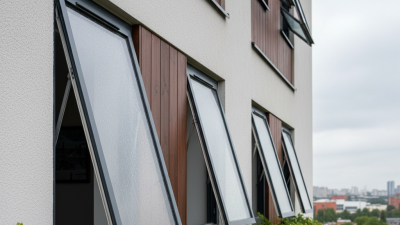
An awning window is hinged at the top and opens outward from the bottom. This design lets fresh air enter while the glass helps shield the opening from light rain. A partially open sash can also offer ventilation without leaving the whole window exposed. That helps. But airflow still depends on wind direction and room layout.

Awning windows often suit kitchens and bathrooms, where regular ventilation can help clear cooking odors or moisture. They can also work above eye level, such as over a counter or in a basement. In a small bathroom, a compact sash may provide airflow without taking up interior space. Not every room is a good fit. The outward opening needs clearance from walkways, shrubs, and nearby structures, and screens may slightly reduce airflow. A window chosen only for appearance can become inconvenient.

Tips: Check the opening path before choosing a size. Consider how far the sash extends and whether you can reach the handle easily. For rainy or windy locations, ask a qualified installer about suitable hardware, seals, and local exposure conditions. Measure carefully; small errors matter.

Awning Windows and Emergency-Egress Opening Requirements

A code-based reference for buyers comparing window applications. The chart shows key dimensional limits in the 2021 International Residential Code (IRC) for emergency escape and rescue openings.

How to read it: An emergency escape opening must provide at least 20 inches of clear width and 24 inches of clear height; the bottom of the clear opening must be no more than 44 inches above the floor. The IRC also requires a minimum net clear opening area of 5.7 square feet (5.0 square feet at grade-floor openings). Awning windows may not provide enough clear opening for egress, so check the product’s net clear opening and local code requirements before specifying.

Reference: 2021 International Residential Code, Section R310.2.1. Requirements vary by jurisdiction and code edition.

Why Global Buyers Source Awning Windows from China

China attracts global buyers through a dense manufacturing base, flexible production, and broad access to glass, aluminum profiles, seals, and operating hardware. UNIDO’s International Yearbook of Industrial Statistics 2024 puts China’s share of global manufacturing value added at about 30%. That scale can support varied order sizes and coordinated component sourcing. It does not guarantee consistent quality. Buyers still need to check materials, finish samples, hardware performance, and production records.

Energy performance also shapes purchasing decisions. The International Energy Agency’s 2023 Global Status Report for Buildings and Construction estimates that buildings used 30% of global final energy in 2022 and produced 26% of energy-related emissions. That matters. Well-specified awning windows can help manage ventilation and heat gain, depending on glazing, climate, and installation. Chinese suppliers often offer multiple frame depths and glazing configurations, making specification comparisons practical. Yet catalog claims alone are weak evidence. Request tested performance data, inspect a production sample, and confirm packing details before ordering. A low quotation may exclude crucial checks or protective packaging. That can become an expensive surprise.

How to Evaluate Chinese Awning Window Manufacturers

Evaluating Chinese awning window manufacturers takes more than comparing prices and catalog photos. Ask how the frame, sash, hinges, and locking points are specified for your project. A clear answer should include profile dimensions, finish options, hardware materials, and available opening sizes. Details matter. Request a production sample, not only a showroom piece, and inspect the corner joints, gasket fit, and drainage slots.

Ask for recent test reports covering air leakage, water penetration, and wind resistance. Check that the tested window configuration matches the model you plan to order; results for one size or glass build may not apply to another. Verify report dates and the testing laboratory directly when possible. Ask for documented inspection steps, including checks for frame squareness and consistent hardware operation. Ask for proof.

Factory visits or live video walkthroughs can show equipment, work areas, and packaging practices, but they do not replace written specifications. Confirm lead times, minimum order quantities, spare-part availability, and how damage claims are handled. Compare the same glass thickness, finish, and hardware across quotations. A low quote can hide important differences. Even careful checks have limits: a sample may not reveal every production variation, so agree on inspection criteria before manufacturing begins.

Profiles of 10 Chinese Awning Window Manufacturers

This guide examines ten Chinese awning-window manufacturers through their production strengths, product focus, and export readiness. One profile centers on standard aluminum frames for residential projects. Another focuses on thermal-break systems for buildings with demanding insulation needs. A third offers steel-reinforced options for larger openings. Details matter.

Other profiles cover factories specializing in custom dimensions, integrated insect screens, powder-coated finishes, and hardware selection. One manufacturer type serves renovation projects, where matching existing openings can reduce installation changes. Another concentrates on bulk orders and repeatable specifications. A further profile highlights suppliers with in-house testing records, while the final one represents smaller workshops offering flexible customization. These are comparison angles, not verified claims about particular companies.

For each supplier, buyers should request drawings, frame-section details, glass compatibility, and documented performance data. Ask how dimensions are checked before production. A clear answer is useful; a polished catalogue alone is not. Sample corners can reveal coating quality and joint alignment, though they cannot prove long-term performance. Export experience also varies by product and destination, so confirm packaging, lead times, and after-sales support directly. Some details may be missed in an initial review. That is worth acknowledging.

How to Select and Verify a Manufacturing Partner

A “top ten” list can help global buyers build a shortlist, but it cannot verify factory performance. Begin with your project requirements: opening direction, frame dimensions, glazing build-up, hardware, finish, and expected weather exposure. For each awning window model, request technical drawings and test reports that match the exact configuration. Check the issuing laboratory, test date, and tested sample details. A polished catalogue is only a starting point.

Ask how the manufacturer controls measurements, assembly, sealing, and final inspection. Request examples of inspection records and a sample order, then compare the delivered unit with its approved drawings. If possible, visit the production site or arrange a live video walkthrough. Look closely at corner joints, drainage paths, gasket continuity, and finish consistency. Small details matter. References from buyers with similar project sizes can help, but confirm them independently.

Before placing a larger order, agree on tolerances, inspection milestones, packaging requirements, replacement parts, and warranty terms in writing. Test a physical sample for smooth opening and closing, and check that labels and hardware match the specification. Photos are useful, but they do not reveal every production issue. Even a careful review leaves some uncertainty; that is a reason to keep the first order manageable and document any changes.

China Top 10 Awning Window Manufacturers for Global Buyers - How to Select and Verify a Manufacturing Partner
No. Verification Dimension What to Request How to Verify Buyer Decision Signal
1 Legal identity and business scope Full Chinese legal entity name, business licence, registered address, and details of the entity that will sign the contract and receive payment. Check the entity through China’s National Enterprise Credit Information Publicity System. Compare its registered details with the quotation, contract, invoice, and bank-account beneficiary. The contracting and payment entities are consistent, and the business scope and registered status can be independently checked.
2 Factory and production control Factory address, production-process overview, current facility photos or video, and an explanation of which operations are performed in-house or subcontracted. Arrange a live video walkthrough or an independent factory audit. Check that the facility, equipment, and production stages match the supplier’s description. The supplier provides access to the actual production site and clearly identifies any outsourced processes.
3 Awning-window design and specifications Dimensioned drawings and specifications covering frame and sash profiles, opening direction, hardware, glass build-up, screens, drainage, and installation details. Have a qualified project or façade professional review the drawings against the opening sizes, local climate, building requirements, and installation method. Drawings identify materials, tolerances, interfaces, and project-specific options rather than relying only on product photographs.
4 Performance test evidence Test reports for the proposed window system, including relevant air leakage, water penetration, structural performance, and thermal or acoustic data where required. Confirm the report’s issuing laboratory, test method, date, specimen configuration, dimensions, and scope. Where relevant, verify that the laboratory’s accreditation covers the test performed. Reports relate to a comparable system and configuration; performance figures are not presented as applying automatically to every size or option.
5 Target-market compliance A compliance plan identifying the codes, standards, certification, labeling, and documentation required in the destination market. Confirm requirements with the project’s designer, local regulator, certification body, or importer. Check certificates and reports directly with their issuer when possible. The supplier distinguishes between general product data and approvals that are specifically valid for the buyer’s market and project.
6 Materials and component traceability Material and component specifications for frame profiles, surface finish, glass, seals, hinges, operators, fasteners, and other critical hardware. Compare the bill of materials and approved samples with the purchase specification. Request batch or supplier records for critical items and document any permitted substitutions. Critical components are defined by specification, and changes require buyer approval rather than being made without notice.
7 Quality management and inspection Quality-control procedures, inspection records, defect criteria, calibration records for relevant measuring equipment, and any current quality-management certificates. Check certificate validity and scope with the issuer. Review sample production and inspection records; a management-system certificate alone does not prove product performance. Inspection stages and acceptance criteria are documented, measurable, and agreed before production.
8 Sample and first-article approval A production-representative sample or mock-up, finish samples, hardware samples, and a written approval procedure before bulk manufacture. Inspect operation, locking, fit, finish, drainage details, dimensions, and packaging. Record approved drawings, sample references, and any agreed deviations. Bulk production will follow a documented, buyer-approved reference sample and specification.
9 Export capability and delivery planning Redacted examples of export documentation, proposed packing method, shipping marks, production lead-time assumptions, and a shipment schedule. Check document consistency and discuss logistics with the nominated freight forwarder. Confirm Incoterms, loading responsibilities, insurance, and inspection points in writing. Lead times and responsibilities are clearly stated, and the packaging is suitable for the product, handling route, and destination conditions.
10 Commercial terms and after-sales support Itemized quotation, payment milestones, warranty terms, spare-parts policy, claims process, and a named contact for technical and post-delivery issues. Compare the quotation with the final drawings and specification. Put scope, exclusions, remedies, inspection rights, and change-control terms into the contract. Pricing and warranty coverage are specific and written; unresolved items are clarified before deposits or production approval.

How to use this table: Treat the ten dimensions as a due-diligence checklist, not as a ranking of named companies. Verify evidence against the exact window configuration, project requirements, and destination-market rules before placing an order.