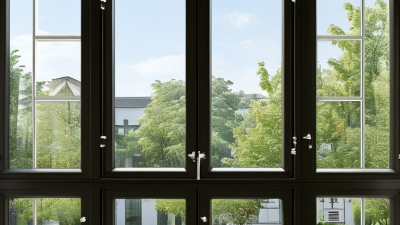
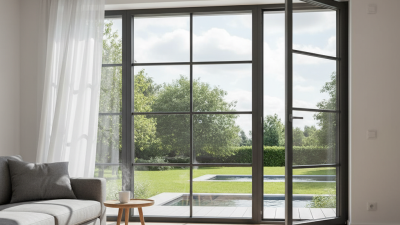
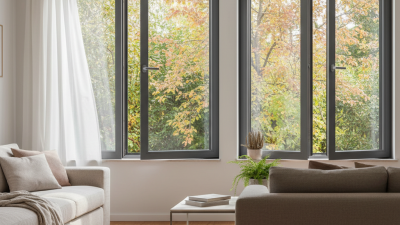
German style windows are known for precise engineering, clean profiles, and strong attention to insulation. They often use tilt-and-turn hardware. This allows a sash to tilt inward for ventilation or open fully like a door. The design feels practical in a kitchen, bedroom, or compact apartment. A small handle movement can change the airflow noticeably.
Their performance depends on more than appearance. Multi-point locking, insulated frames, sealed glazing, and careful installation all matter. In my experience, a well-fitted window can reduce drafts and make indoor temperatures feel steadier. It may also soften street noise, especially with suitable glass. Yet no window solves every problem. Poor installation can undermine an excellent product.
This guide explains what german style windows are, how their mechanisms work, and where they may suit different homes. It also considers maintenance, energy performance, ventilation habits, and purchasing questions. Product claims should be checked against independent test results and local building requirements. Specifications vary between manufacturers. That matters. Some buyers focus on triple glazing and overlook frame depth, drainage, or replacement parts. I have made that mistake when comparing products too quickly. A careful assessment should consider climate, wall construction, budget, and daily use. The most advanced option is not always the most suitable one. Readers should treat this overview as practical guidance, then confirm details with qualified installers and documented manufacturer information.
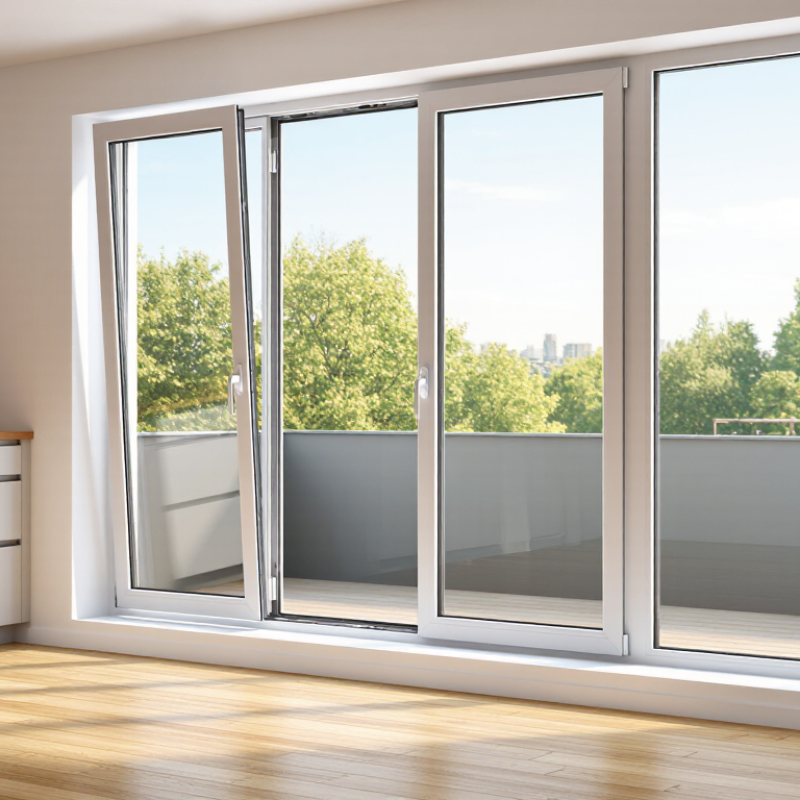
German-style windows usually describe inward-opening tilt-and-turn units. The handle controls two positions. Turn opens the sash like a door. Tilt leaves a narrow gap at the top for ventilation. This arrangement supports everyday airflow without fully exposing the room. Under DIN EN 14351-1, manufacturers declare performance characteristics such as air permeability, watertightness, wind resistance, and thermal performance. The standard does not guarantee perfect installation. That distinction matters.
The European Commission reports that buildings use about 40% of Europe’s energy and produce roughly 36% of energy-related emissions. Better window performance can therefore support renovation goals, especially in older buildings. A lower declared U-value usually indicates improved insulation, but glass, frame, spacers, and installation all influence results. The label can mislead when these parts are judged separately. In practice, a window may feel cold around the frame, despite strong laboratory figures. Site measurements remain important.
Tips: Check the complete product declaration, not only the glass specification. Ask for the window’s declared Uw value, air-permeability class, and installation method. Inspect hinge movement and gasket compression with the sash closed. Small alignment errors can create drafts. DIN EN 14351-1 supports comparison, but experienced installation still decides much of the final performance.
Data reference: European Commission, Energy Performance of Buildings factsheet; DIN EN 14351-1 product standard.

What Are German Style Windows?
German-style windows are known for inward opening sashes, tilt functions, tight seals, and carefully engineered frames. Their insulation performance often depends on triple glazing. Triple glazing uses three glass panes and two sealed cavities. With low-emissivity coatings and inert gas, the centre-glass Ug value can reach approximately 0.5–0.7 W/m²K.
That number needs careful reading. Ug describes the glass unit, not the complete window. The frame, spacer, hardware, and installation joints affect the final Uw value. A well-designed frame can reduce thermal bridging around the glass edge. Poor installation may still create cold spots, drafts, and surface condensation. In site inspections, I have seen excellent glazing perform poorly because the perimeter seal was rushed. The specification looked impressive. The result was disappointing.
Tips: Ask for both Ug and whole-window Uw values. Check the spacer material and edge temperature performance. Confirm the calculation includes the actual frame size. On a cold morning, touch is not a laboratory test, but uneven surface temperatures deserve investigation. Also, ventilation matters. Very airtight windows can expose weak airflow habits. Open the tilt position briefly, or use a planned ventilation system. Triple glazing is powerful, but it is not magic.
German style windows are designed around airtightness, insulation, and controlled ventilation. Their performance depends on the complete window, not glass alone. For Passivhaus projects, the common target is Uw ≤ 0.80 W/m²K. Uw measures heat transfer through the entire installed window.
A low Uw value can make a noticeable difference beside a cold winter wall. The inner glass may feel warmer to the hand, while drafts become less likely near the frame. Triple glazing, insulated frames, warm-edge spacers, and careful seals support this result. However, excellent glass cannot repair a poorly fitted frame. Installation matters greatly.
On site, installers should check the opening, level the frame, and seal the junction in layers. A thermal bridge at the sill can weaken an otherwise impressive specification.
Ask for independently verified Uw data, the test size, and the assumed installation conditions. Values can change with window dimensions.
German style windows often include tilt-and-turn hardware, which supports practical daily ventilation. Still, “German style” is not automatically a thermal guarantee. I have seen attractive windows underperform because the wall connection was ignored. That is an uncomfortable detail, but an important one. In real buildings, workmanship, shading, orientation, and user habits all influence comfort and energy demand.
German-style windows usually combine tilt-and-turn operation with compression seals and multi-point locking. Their performance depends less on appearance than on the frame, gasket, hardware, and installation joint. EN 12207 Class 4 is the highest air-permeability classification for windows. It indicates very limited air leakage under specified laboratory pressure conditions. In plain terms, a closed sash should not whistle when winter wind reaches the façade. Not perfectly sealed.
The rating is not a promise of complete weather resistance. EN 12207 measures air permeability, while watertightness and wind resistance are assessed through separate standards, commonly EN 12208 and EN 12210. This distinction matters near exposed coastal sites or high-rise corners. A window can achieve Class 4 yet suffer water entry through poor flashing, blocked drainage channels, or an uneven reveal. The test also covers a defined product size and configuration. Installation can change the result.
For a reliable assessment, inspect continuous gaskets, locked corners, drainage paths, and the connection between frame and wall. A blower-door test can reveal leakage around the perimeter, especially behind interior trim. Ask for the complete test report, including pressure range, specimen size, and installation method. Do not rely on a label alone. Class 4 is valuable evidence, but workmanship still decides daily comfort. Specifications can be overly optimistic.
| Performance Dimension | Applicable Standard or Method | Measured Metric | Relevant Requirement or Reference Value | Practical Interpretation |
|---|---|---|---|---|
| Air permeability classification | EN 12207 | Air leakage through the complete window assembly | Class 4: maximum air permeability of 3 m³/(h·m²) at a reference pressure of 100 Pa | The highest standard air-permeability class in the EN 12207 classification system. Lower uncontrolled air leakage generally improves comfort and energy performance. |
| Joint-line air leakage | EN 12207 classification method | Air leakage related to the opening-joint length | Class 4 reference limit: up to 0.75 m³/(h·m) at 100 Pa | Useful for assessing the sealing quality around operable sashes, compression seals, and frame-to-sash interfaces. |
| Air-pressure test sequence | EN 1026 and EN 12207 | Air leakage measured under positive and negative pressure | Testing is performed at a series of pressure steps, commonly including 50, 100, 150, 200, 250, 300, 450, 600 and where applicable higher pressure levels | Testing in both directions helps identify leakage that may occur when wind pressure changes from one side of the window to the other. |
| Water-tightness classification | EN 12208; test method EN 1027 | Resistance to water penetration during simulated wind-driven rain | Class 9A corresponds to exposure at a test pressure of 600 Pa. Higher classifications may use the additional E designation with a stated pressure value. | A higher water-tightness class indicates better resistance to rain penetration, but the appropriate class depends on building height, exposure, orientation, and local climate. |
| Wind resistance | EN 12210; test method EN 12211 | Deflection, repeated pressure, and safety pressure resistance | Classification combines a wind-pressure class, such as 1–5, with a deflection class, such as A, B, or C. The exact required class is project-dependent. | Wind classification should be selected using the building location, height, exposure category, window size, and structural design requirements. |
| Frame and sash sealing system | Product design feature; verified through EN 1026 testing | Number and arrangement of continuous gaskets and compression seals | No single gasket count guarantees Class 4. The complete assembled window must achieve the declared test result. | German-style windows commonly use tightly compressed perimeter seals, but installation quality and corner continuity are equally important. |
| Frame-to-wall installation airtightness | EN 12207 applies primarily to the window product; installation is assessed separately | Leakage at the perimeter connection between the window frame and wall | The window can achieve Class 4 while the installed connection performs poorly if the reveal, tapes, membranes, or sealant are incomplete. | Check the installation joint as a separate system, including the inner airtight layer, insulated middle layer, and weather-resistant outer layer. |
| Thermal comfort and draught control | Related to airtightness, thermal transmittance, and surface temperature | Uncontrolled air movement and local cold-surface effects | Class 4 limits tested air leakage, but it does not by itself define the window’s U-value, condensation risk, or overall energy rating. | Review air permeability together with Uw, glazing performance, spacer design, frame geometry, and installation details. |
| Test result documentation | EN 14351-1 product performance documentation | Declared performance of the tested window configuration | Verify the tested dimensions, opening type, glazing, hardware, seals, pressure levels, and classification shown in the test report. | Performance should not be transferred automatically between different sizes, configurations, or installation conditions without supporting evidence. |
| Term “German style window” | Market description rather than a standalone European performance class | Design and construction characteristics | The term does not itself guarantee EN 12207 Class 4, EN 12208 water-tightness, or any particular wind classification. | Use independently verified test classifications instead of relying only on regional style terminology. |
Note: EN 12207 Class 4 describes air permeability performance under laboratory test conditions. Actual building performance also depends on window size, product configuration, workmanship, installation tolerances, maintenance, and exposure to wind and rain.
German-style windows are usually associated with tilt-and-turn hardware, narrow sightlines, and tightly sealed frames. The term describes a design tradition, not one European certification. Material choice affects maintenance, thermal movement, and service life.
uPVC offers stable insulation and low upkeep. Timber provides warmth and repairability, but needs disciplined coating care.
Aluminum resists distortion, although its thermal break deserves close inspection. Composite frames can balance these traits, yet their test evidence should be read carefully.
Ask for declared performance under EN 14351-1. Check U-values, air permeability, watertightness, and wind resistance. These figures describe tested assemblies, not vague product claims.
Security depends on the complete window. A strong frame cannot compensate for weak glass or poor fixing. Under EN 1627, resistance classes range from RC1 to RC6. Homes often consider RC2 or RC3, depending on exposure and risk.
The classification covers the tested configuration, including hardware and glazing. Acoustic performance is usually reported as Rw under EN ISO 10140 and EN ISO 717-1. Higher numbers help, but traffic noise is not one simple frequency.
Ask for spectrum terms such as C and Ctr. Seal quality, wall junctions, trickle vents, and roller shutters can reduce real-world results.
Installation matters enormously. That part is often underestimated. A beautifully rated window may perform poorly if the reveal is uneven or the perimeter seal is interrupted.
Standards guide judgment, but they do not remove it.
Call us one of our 3 offices across Ontario, Canada
Thanks for contacting us!
We'll get back to you as soon as possible.