A Hydraulic Regulation Joystick gives an operator direct, hand-level control over hydraulic functions. Depending on its design, it can regulate oil flow or signal a valve to move a machine function. That control matters when positioning a loader bucket, adjusting an excavator boom, or steering equipment through a confined work area. Smooth movement can make the task easier to manage. Small inputs matter.
The main reason to choose this control is the potential for precise, responsive operation without requiring large hand movements. In a cab, a well-placed joystick can help reduce awkward reaches and make repeated adjustments feel more consistent. However, performance depends on more than the handle. Valve compatibility, hydraulic pressure and flow, control response, mounting position, and electrical connections on electrohydraulic models all deserve review. Fit matters.
A practical selection starts with the machine’s specifications and the work it performs. Check the required axes and functions, the expected operating environment, and the manufacturer’s guidance for installation and maintenance. A joystick that feels smooth on one machine may respond differently when paired with another valve or hydraulic circuit. That detail is easy to overlook. Operators should also consider grip comfort, clear function labeling, and whether routine inspection is straightforward. The right choice is not automatically the most elaborate model. It is the one that provides predictable control, suits the system, and supports dependable operation over time.
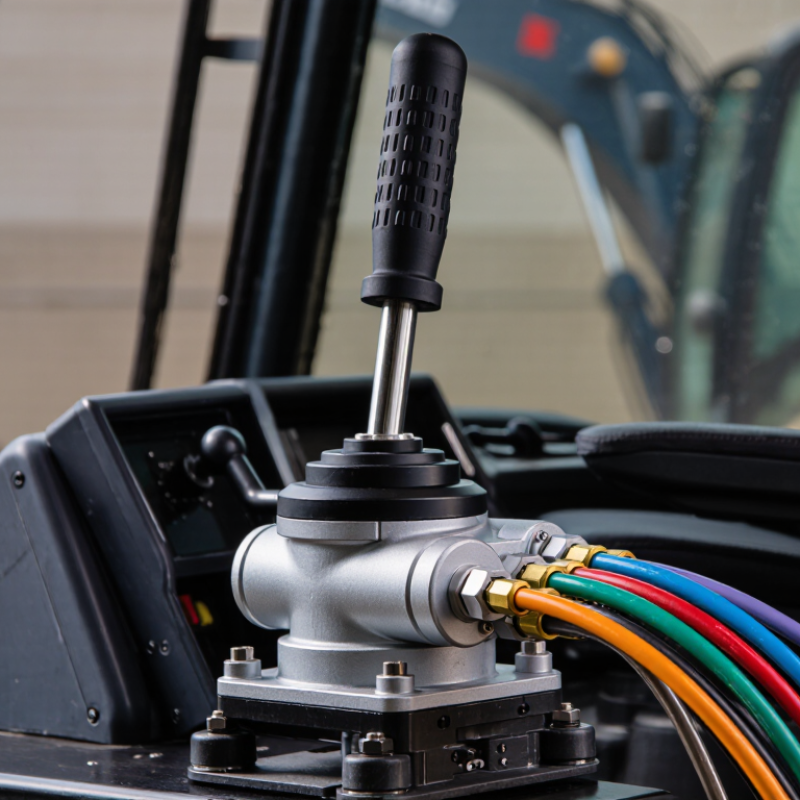
A hydraulic regulation joystick is a hand-operated controller that adjusts how a machine’s hydraulic functions respond. Moving the handle sends either pilot pressure or an electrical command to a control valve. The valve then directs fluid toward an actuator, such as a boom cylinder or travel motor. The joystick itself usually does not carry the machine’s main hydraulic flow. A small movement can produce a gradual response; a larger movement can request faster movement. That relationship depends on the valve, controller settings, and system design.
The term is not completely consistent across manufacturers or industries. Some joysticks operate hydraulic pilot valves directly, while others use sensors and electronic signals to control proportional valves. This distinction matters when diagnosing delayed or uneven movement. Allied Market Research’s Hydraulic Equipment Market report estimated the global market at $39.8 billion in 2020 and projected $54.9 billion by 2030. That figure describes the wider equipment market, not joystick performance. ISO 4413 provides general requirements for hydraulic fluid power systems, including safety-related design considerations. In practice, check the joystick’s signal type, travel range, and return-to-neutral behavior against the machine’s service information. Small details matter. A worn linkage can feel like a valve problem.
| Dimension | What It Means | How It Works | Why It Matters |
|---|---|---|---|
| Definition | A hand-operated control that uses hydraulic pressure to help command one or more machine functions. | Moving the lever changes a control signal. In a pilot-operated system, hydraulic pilot pressure acts on a main control valve spool. | It lets an operator control hydraulic functions from a conveniently positioned lever. |
| Control signal | The joystick may use hydraulic pilot pressure, mechanical linkage, or electrical signals, depending on its design. | Hydraulic pilot models meter pressure to the main valve; electrohydraulic models convert lever movement into electrical signals for a valve controller. | Identifying the signal type helps ensure compatibility with the machine’s control system. |
| Controlled functions | Common functions include lifting, lowering, tilting, swinging, and travel or steering control. | Each lever axis or direction is connected to a corresponding valve section or control channel. | One control can provide intuitive access to several machine movements. |
| Movement and response | Lever travel and valve response determine how gradually a function can be controlled. | Proportional control allows output to vary with joystick movement, subject to the valve and system design. | Gradual control can support accurate positioning and smoother operation. |
| Operator effort | Pilot-operated designs use hydraulic pressure to shift the main valve rather than relying solely on direct manual force at that valve. | The joystick sends a control pressure to the main valve’s pilot stage. | This arrangement can reduce the effort needed to operate larger hydraulic functions. |
| System compatibility | Important factors include the required pilot pressure, flow, port arrangement, number of axes, and valve configuration. | These requirements are specified by the machine and hydraulic circuit design. | Checking specifications before selection helps avoid poor response or installation mismatch. |
| Operating environment | Machines may operate in conditions involving vibration, dust, moisture, or temperature variation. | Housing, seals, mounting, and electrical protection (where applicable) should suit the intended environment. | Appropriate environmental protection supports dependable operation and service life. |
| Maintenance and safety | Inspection should follow the machine and component service instructions. | Check for leaks, damaged lines, loose mounting, unusual lever response, and correct neutral behavior. Relieve stored hydraulic pressure before servicing. | Regular checks help identify wear or faults; safe isolation reduces the risk of injury from pressurized fluid or unexpected movement. |
| When it is a good choice | A hydraulic regulation joystick is suitable when a machine needs hand-operated, controlled input to hydraulic functions. | The best design depends on the machine’s circuit, required control feel, operating environment, and service requirements. | Choosing to match the application can improve controllability, ergonomics, and system integration. |
Note: “Hydraulic regulation joystick” can describe different control arrangements. Confirm whether the required unit is hydraulic pilot-operated, mechanically linked, or electrohydraulic, and verify the machine manufacturer’s specifications before installation.


 Get a Free Quote
 See our Doors





 Start your estimate