Top WPC Decking Panel Manufacturers for Global Buyers
Choosing the right Wpc Decking Panel manufacturer can shape a project’s cost, lifespan, and reputation. Global buyers need more than attractive product photos. They need evidence from production floors, laboratories, and completed outdoor spaces.
This guide examines leading manufacturers through practical purchasing criteria. We consider material formulas, surface embossing, color consistency, and dimensional stability. Factory experience matters, especially when panels face strong sunlight, heavy rain, or coastal air. Reliable suppliers should explain their wood-plastic ratios, core structure, testing methods, and quality controls clearly. A close look at extrusion lines can reveal more than a polished brochure. Ask about batch records, moisture checks, slip resistance, and packaging protection. Small details matter.
A dependable manufacturer also supports international buyers after shipment. Clear drawings, installation guidance, spare samples, and responsive communication reduce costly mistakes. Export experience helps, but it should be verified through references, inspection reports, and realistic delivery records. No ranking is permanent. Market conditions change, and even reputable factories can experience delays or inconsistent batches. That deserves honest attention. Buyers should compare warranties carefully and confirm whether they cover fading, cracking, or structural failure. Local building requirements also need review before ordering. This introduction sets a practical framework for comparing top Wpc Decking Panel manufacturers worldwide, balancing technical performance, commercial reliability, and real project experience.
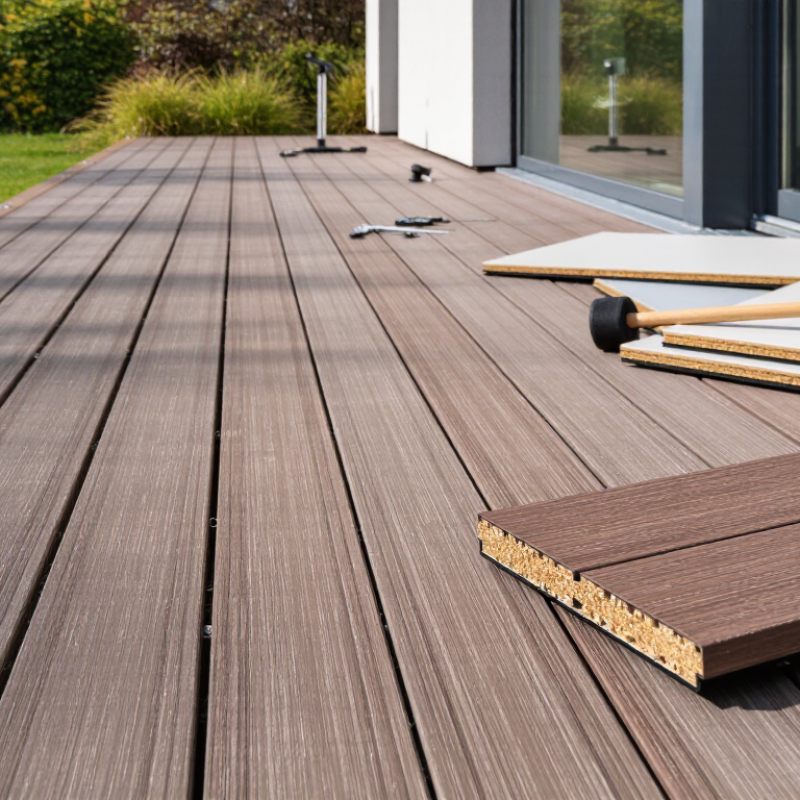
WPC Decking Defined: Typical 50–70% Wood-Fiber Content and Core Profiles
WPC decking combines wood fiber, polymers, and stabilizing additives. Typical boards contain 50–70% wood fiber by weight. This range influences texture, stiffness, color, and moisture response. Higher fiber content can create a warmer wood-like appearance. It may also increase swelling if production control is weak. The percentage alone is not a guarantee.
Core profile design matters just as much. Solid boards feel dense underfoot and usually handle frequent loading well. Hollow boards reduce weight and material use. Their internal ribs must be evenly formed and properly supported during installation. Some manufacturers add capped surfaces for improved stain and moisture resistance. Buyers should request cross-section samples, not rely on catalog images.
I have found that reliable purchasing depends on repeatable test data. Ask for moisture absorption, slip resistance, thermal expansion, and fastener pull-out results. Independent laboratory reports add useful confidence. Batch consistency also deserves attention, especially for large projects across different climates. A practical check is simple: compare boards from several production lots. Small differences can become visible across a long walkway. Site teams should also confirm joist spacing, drainage, and ventilation before fixing boards. I would not select a profile only because it feels heavy. Weight can hide a weak rib structure or poor polymer distribution. Manufacturers with clear technical sheets and installation guidance are easier to evaluate, although documentation still needs real-world verification.
Global Market Snapshot: Growth Rates, Key Regions, and Buyer Demand Data
The global WPC decking panel market is expanding at an estimated 8% to 12% annual rate, depending on product definitions and reporting methods. Asia-Pacific remains the fastest-growing region, supported by urban housing, hospitality projects, and outdoor renovation. North America shows steady replacement demand, while Europe prioritizes low-maintenance materials and verified environmental documentation. Growth is not uniform.
Buyer demand is becoming more specific. Importers often request 3D embossing, capped surfaces, UV resistance, and concealed-fixing compatibility. A typical commercial inquiry may ask for 20 to 40 millimeter thickness, slip-resistance data, and container-loading details. Residential buyers usually compare color stability, installation speed, warranty terms, and total cost over ten years. Price still matters, but cheap boards can create higher maintenance risks. That point deserves more honest attention. Market forecasts also vary because some count fencing and wall cladding with decking.
Tips: Compare regional demand with actual project evidence, not headlines. Ask manufacturers for recent test reports, moisture-expansion results, batch consistency records, and packaging photographs. Check whether quoted growth rates describe revenue, volume, or installed area. These measures can tell very different stories. For global sourcing, request samples from production batches rather than showroom pieces. Inspect edge finish, screw holding, color variation, and surface temperature under direct sunlight. Small checks often reveal large differences. Also review port access, lead times, and replacement-panel policies before signing purchase terms.
Top WPC Decking Panel Manufacturers for Global Buyers — Global Market Snapshot
Regional demand share and projected growth rates for the wood-plastic composite decking market, excluding company and brand-level data.
North America remains the largest regional demand center, while Asia-Pacific is projected to record the fastest growth through 2029. Buyer demand is supported by low-maintenance outdoor living, moisture resistance, and replacement of traditional timber decking.
Data basis: consolidated public market-research estimates for global WPC decking demand and regional growth outlooks, including Grand View Research and Fortune Business Insights. Figures are rounded and represent market-level estimates, not manufacturer sales.
Top WPC Decking Manufacturers by Capacity, Export Reach, and R&D
Top WPC Decking Panel Manufacturers for Global Buyers
Capacity, export reach, and R&D reveal more than product photos. Grand View Research valued the global wood-plastic composite market at about USD 7.1 billion in 2023. It also forecasts steady growth through 2030. Buyers should request audited annual capacity, not only installed machinery figures. A factory producing 30,000 tonnes annually needs different planning from one claiming 100,000 tonnes. Real output matters.
Export reach requires practical evidence. UN Comtrade data can help compare national trade flows, although WPC decking may appear under broader customs codes. Ask for shipment records, destination coverage, and average lead times. A reliable supplier should explain resin sources, moisture control, and container loading methods. R&D capability is equally important. Look for documented tests on slip resistance, UV aging, thermal expansion, and fastener performance. ASTM and EN test references add credibility, but certificates should match the actual profile and production batch. Some data sheets still feel too optimistic. Question them.
Tips: Compare production capacity with recent export volumes. Request samples from different batches. Check colour consistency after accelerated weathering. Confirm recycled-content claims through independent testing. Review warranty terms carefully; climate, installation, and maintenance can change performance.
Buyer Evaluation: Density, Slip Resistance, Warranty, and Installed Cost
Top WPC Decking Panel Manufacturers for Global Buyers
Buyer Evaluation: Density, Slip Resistance, Warranty, and Installed Cost
Global buyers should judge WPC decking manufacturers through measurable performance, not catalog photographs. Density affects stiffness, screw holding, impact resistance, and transport weight. Ask for tested density ranges, not one attractive laboratory figure. A dense board can feel solid, but excessive weight may increase framing and freight costs.
Slip resistance needs practical evidence. Request dry and wet test results, especially for poolside or rainy installations. Surface texture matters when shoes carry mud or fine sand. Inspect sample boards after abrasion testing. A panel may pass a factory test yet feel slippery after repeated cleaning. Small details matter.
Warranty language deserves careful reading. Check coverage periods, fading limits, installation conditions, and claim procedures. Some warranties exclude poor ventilation, standing water, or unsuitable fasteners.
Installed cost includes substructure, clips, labor, waste, delivery, and future maintenance. A cheaper panel can become expensive after extra joists or difficult cutting. Compare a complete square-meter estimate from each manufacturer. An early estimate often misses drainage work. That mistake is easy to make.
Reliable suppliers should provide technical data, installation guidance, batch traceability, and responsive support across borders. When documents conflict, pause the order and request written clarification.


 Get a Free Quote
 See our Doors





 Start your estimate