Who Are the Top 10 Acoustic Panel Manufacturers?
Choosing Acoustic Panels is not simply a matter of comparing colors or prices. A panel that looks substantial may absorb only part of the sound spectrum. Room size, wall coverage, mounting method, and material all affect performance. In a small meeting room, for example, reflections between bare walls can blur speech, even when the furnishings look polished.
Acoustics researcher Trevor Cox’s work highlights a useful principle: room sound depends on how sound interacts with surfaces and space. That is a paraphrase, not a direct quotation. It matters because product claims need context. Absorption ratings can help, but they do not tell buyers everything about installation, durability, fire performance, or suitability for a specific room. Ask for test data and check how it was measured. Details matter.
This guide compares ten manufacturers through practical criteria: product range, documented acoustic performance, customization, installation support, and transparency. It is not a universal ranking; the right supplier depends on the project. A studio, classroom, and open office rarely need the same solution. Some comparisons also remain imperfect, since manufacturers may publish different test methods or levels of detail. That deserves scrutiny. By looking closely at what each company offers—and what its evidence can actually show—readers can make a more informed shortlist.
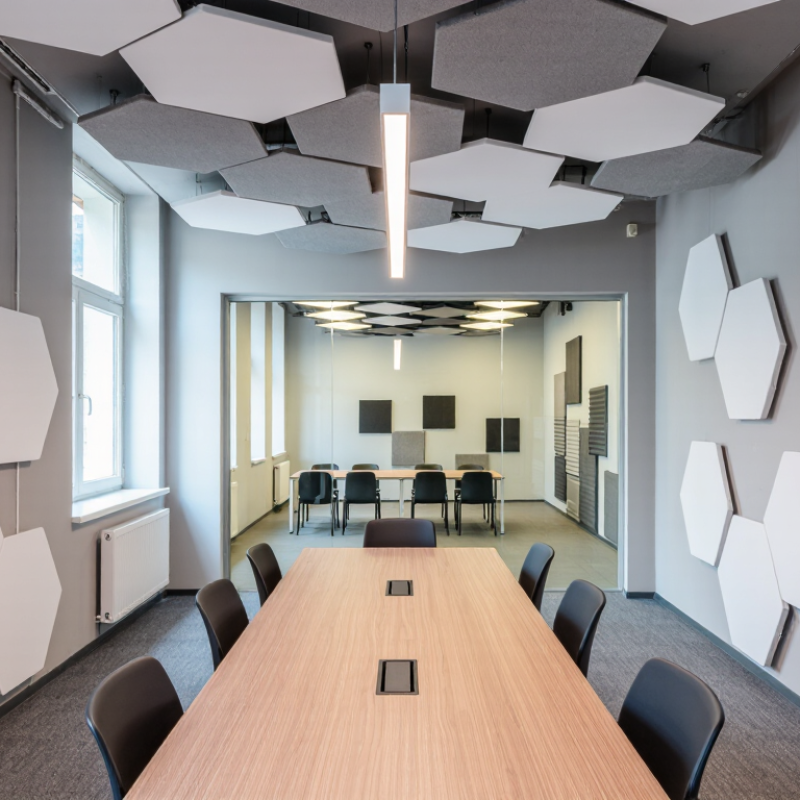
What Acoustic Panels Are and How They Improve Room Acoustics
Acoustic panels are sound-absorbing surfaces, commonly made with porous cores and fabric coverings. They reduce reflections inside a room; they do not block sound passing through walls. Think of a bare meeting room: voices bounce off glass, plaster, and a hard table, making speech feel blurred. Panels soften those reflections. That difference matters.
ANSI/ASA S12.60-2010/Part 1 sets a reverberation-time limit of 0.6 seconds for certain core learning spaces under 10,000 cubic feet. Reverberation time describes how long sound lingers after its source stops. It is a useful design benchmark, not a universal target. Room use, furnishings, and occupancy all change the result. In practice, panels on reflection points can improve speech clarity, while thicker absorbers or air gaps may help address lower frequencies. Placement matters. Measure before and after installation where possible; a room can look quieter without sounding much clearer. Panels also cannot fix every problem, especially noise entering through a door or window. I would treat product ratings as starting evidence, not a promise of the same outcome in every room.
How to Evaluate Acoustic Panel Manufacturers
Evaluating an acoustic panel manufacturer starts with the evidence behind its performance claims. Ask for test reports that show absorption across specific frequency bands, not just one impressive rating. Check whether the tested assembly matches your planned installation, including panel thickness, backing, air gap, and mounting method. Numbers matter. A tidy sample can distract from details that change results in a real room. Even clear data may leave gaps.
Ask how the manufacturer supports product selection, custom dimensions, and installation planning. A knowledgeable team should explain trade-offs in plain language, such as why a thin panel may do little for lower-frequency noise. Request written care instructions and confirm that the stated fire, emissions, and durability information fits your project requirements. Requirements vary by building and location, so verify them with the relevant project professionals. Ask for context. A polished brochure is not proof of consistent production.
Check lead times, packaging, replacement availability, and how damaged deliveries are handled. If possible, inspect a sample for fabric tension, edge finish, and attachment quality. These small checks cannot replace independent testing, but they can reveal workmanship issues. Compare responses carefully; a prompt answer is useful, yet a precise answer is better. When information is missing, note the gap and ask again.
Who Are the Top 10 Acoustic Panel Manufacturers?
Who are the top 10 acoustic panel manufacturers? There is no single reliable ranking for every project. The strongest candidates combine documented acoustic performance, consistent production, and clear technical support. Compare panels using test reports that state the measurement method and frequency range, not just a broad sound-absorption claim. A panel that performs well in a meeting room may not suit a noisy workshop.
A practical shortlist should cover different needs: fabric-wrapped panels for offices, durable surfaces for busy corridors, and moisture-tolerant options for demanding interiors. Check panel thickness, core material, edge finish, mounting hardware, and available sizes. Ask whether published test results apply to the exact product being quoted. Small differences matter. A neat sample can hide awkward seams or difficult installation.
The top ten should be judged against the project, not marketing language. Request samples, technical sheets, production lead times, and guidance on cleaning and replacement. For a real comparison, record each supplier’s test evidence, customization options, delivery reliability, and warranty terms. A ranking can look precise, but project conditions are rarely tidy. Room shape, ceiling height, and existing finishes can change what works, so even a careful shortlist may need revision after a site review.
How Leading Manufacturers Differ in Materials and Applications
Acoustic panel manufacturers differ in more than color and shape. Their material choices influence sound absorption, durability, weight, and suitable room conditions. Mineral-fiber and fiberglass panels can absorb a broad range of speech frequencies when installed with appropriate air gaps. PET panels are lightweight and often useful in busy offices or classrooms. Perforated wood panels add a hard finish, but their backing and cavity depth affect performance. Foam may help control reflections, though it does not automatically block sound between rooms.
Applications shape product design. A recording room may need carefully placed broadband absorbers, while a restaurant often benefits from ceiling panels that reduce conversation noise without dominating the interior. Gyms and transit areas need surfaces that tolerate frequent cleaning and impact. Manufacturers should provide test data, installation guidance, and clear notes about mounting conditions. A published rating alone can mislead; room layout changes results. That detail is easy to overlook.
Tips: Match panel material to the room’s humidity, cleaning needs, and noise problem. Ask for tested performance data, and check whether the test setup resembles your installation. Leave space for a sample. Small differences in texture and finish can matter more in person.
Acoustic Panel Materials: Typical NRC Ranges
A material-focused comparison of representative Noise Reduction Coefficient (NRC) ranges—not a manufacturer ranking.
Applications vary by construction: Fabric-wrapped fiberglass and mineral wool panels are commonly used on walls and ceilings in offices, classrooms, and studios. PET felt panels are used for wall treatments, screens, and baffles. Acoustic foam is used in studios and control rooms. Perforated wood panels with absorptive backing are used in offices, auditoriums, and other spaces where a wood finish is desired.
Ranges are representative, not guaranteed product ratings. Actual NRC depends on thickness, mounting, air gap, and test results; compare product-specific reports tested to ASTM C423.
How to Choose an Acoustic Panel Manufacturer for Your Project
Choosing an acoustic panel manufacturer starts with the room, not the finish. A lively meeting room needs different absorption from a quiet recording space. Ask for test reports showing the Noise Reduction Coefficient (NRC) and absorption by frequency. ASTM C423 reports can help compare products, but NRC is a rounded average across four mid-frequency bands. It does not describe every sound problem. That matters.
Check whether the tested setup matches your project. Panel thickness, air gap, and mounting method can change performance. Ask for data tested under the same installation conditions you plan to use, such as ISO 354 or ASTM C423. The World Health Organization’s Guidelines for Community Noise recommend classroom background noise below 35 dB(A) during teaching. Panels may reduce reverberation, but they will not necessarily block noise coming through a wall. Ask the manufacturer to distinguish those goals.
Then examine practical reliability: project references, sample consistency, installation details, lead times, and replacement options. Request a small sample and inspect its edges, fabric tension, and color in the actual room lighting. Not just color. A polished sample can still hide awkward seams or difficult mounting. I would compare two or three tested options against the room’s measured needs, rather than choose the highest NRC alone. Some details are easy to overlook until installation day.


 Get a Free Quote
 See our Doors





 Start your estimate