Buying platinum doors and windows is not simply a matter of choosing a bright metallic finish. The decision affects security, insulation, weather resistance, maintenance, and long-term property value. A beautiful frame can still perform poorly if its glass, seals, or installation details are overlooked.
Building-science expert Joseph Lstiburek offers a practical warning: “Water is the most destructive force in buildings.” That reminder matters when evaluating platinum doors and windows. Look closely at drainage channels, corner joints, gaskets, and threshold protection. Imagine heavy rain striking the frame for several hours. Where will the water go? A showroom display rarely answers that question.
These seven tips will help buyers examine the complete product, not only its appearance. They cover frame materials, thermal performance, glazing, hardware, certification, installation, and after-sales support. Ask for documented U-values and air-leakage results. Check whether the finish has been tested for fading, corrosion, and scratching. Feel the hardware before purchasing. It should operate smoothly, without looseness or resistance.
Some choices remain imperfect. A thicker frame may improve strength but reduce visible glass. Triple glazing can improve comfort but increase weight and cost. Even experienced buyers can miss installation risks. That is why independent measurements and written specifications matter. Do not rely on confident sales language alone.
Platinum doors and windows should look refined, but performance deserves equal attention. The best purchase balances design, evidence, climate needs, and realistic maintenance expectations.
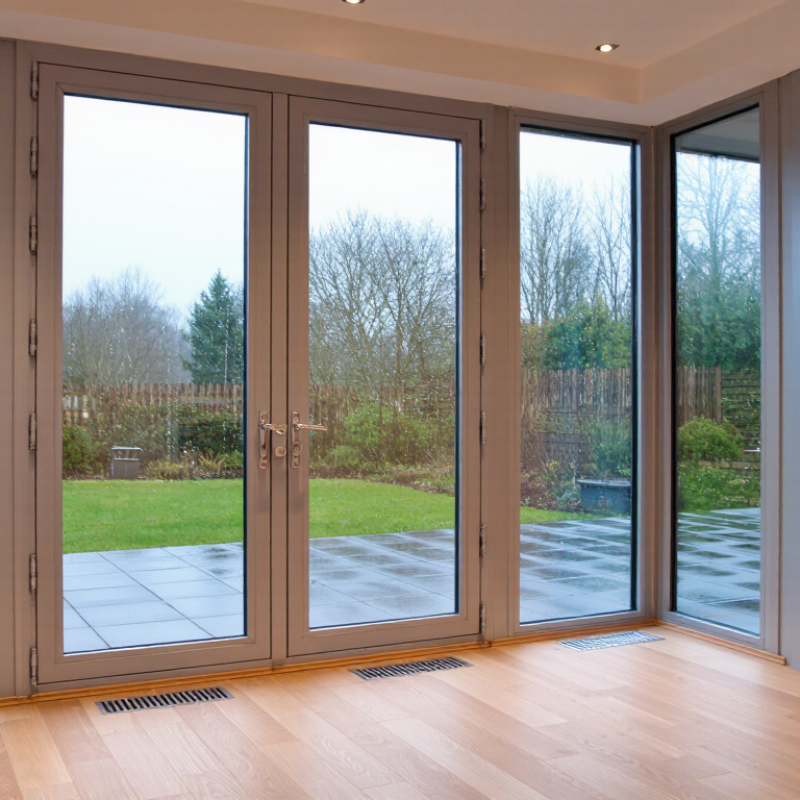
Platinum doors and windows are not usually made from platinum. “Platinum” often describes a refined color, coating, or premium product range. Confirm the core material before judging the price. Aluminum offers slim frames and good corrosion resistance, while uPVC provides practical insulation. Timber adds warmth, but it needs regular care. The right choice depends on climate, exposure, and building use.
Check the finish in natural light. A smooth surface should not show uneven color or rough edges. Compare double and triple glazing for heat control, noise reduction, and comfort. Ask for verified performance documents, not only attractive figures. Strong seals matter too. Poor seals can cause drafts around a beautiful frame. Hardware should feel firm, align correctly, and resist moisture in kitchens or coastal areas. Small details reveal workmanship.
Match the style to the room. Sliding doors suit wide openings and patios, while casement windows support controlled ventilation. French doors create a traditional appearance but require more clearance. Consider privacy glass for bathrooms and low-maintenance finishes for busy homes. Measure openings carefully, and confirm how installation affects drainage and insulation. A reliable installer should explain maintenance and provide clear warranty terms. Some buyers focus too heavily on appearance. That is understandable, but it can become an expensive mistake. A platinum finish may look impressive today, yet poor thermal performance will matter every season.

7 Tips for Buying Platinum Doors and Windows
Treat “platinum” as a product label, not proof of superior performance. Ask for tested U-factor, solar heat gain coefficient, and air-leakage results. Lower U-factors usually improve insulation, while suitable solar control prevents overheated rooms. Check whether the glass includes low-emissivity coating and warm-edge spacers. Small details matter.
Inspect the frame carefully. Thermal breaks reduce cold surfaces and condensation. Durable finishes should resist fading, peeling, and coastal salt exposure. Look for strong corner joints, reliable drainage paths, and corrosion-resistant hardware. A long warranty helps, but read its exclusions. Installation quality can still weaken an excellent window.
Security needs practical evidence. Consider laminated glass, reinforced locks, protected hinges, and a multipoint locking system. Ask whether the complete unit was tested, rather than only the lock. Measure openings accurately before ordering. Uneven walls often create frustrating gaps. I once underestimated installation tolerances, and the final adjustment took longer than expected. That mistake made the energy benefits less convincing. Request written performance data, installation details, and maintenance requirements before paying a deposit. If a seller avoids specific figures, pause and ask better questions.
| Tip | Evaluation Area | Recommended Benchmark or Target | What to Check | Why It Matters |
|---|---|---|---|---|
| 1 | Compare U-Factor | Choose a lower U-factor. A practical high-performance target is approximately 0.30 Btu/h·ft²·°F or lower for windows; door targets depend on glazing and construction. | Review the NFRC or equivalent rating label and confirm whether the value applies to the complete unit, including the frame. | A lower U-factor means less heat passes through the product, helping reduce heating demand in cold weather. |
| 2 | Select the Correct Solar Heat Gain Coefficient | Consider climate and orientation. A lower SHGC, often around 0.25–0.40, can help limit cooling loads; higher values may be useful in cold climates with beneficial winter sun. | Check the SHGC rating and evaluate south-, east-, and west-facing openings separately. | SHGC indicates how much solar heat enters through glazing. The best value depends on local climate, shading, and window direction. |
| 3 | Minimize Air Leakage | For residential windows, look for an air-leakage rating of 0.30 cfm/ft² or lower, where this rating is reported under the applicable test method. | Inspect weatherstripping, compression seals, corner joints, and the installation details around the frame. | Lower air leakage improves comfort, reduces drafts, and helps prevent conditioned air from escaping. |
| 4 | Assess Water Resistance | Require documented water-penetration testing, such as ASTM E331 or ASTM E547, with the tested pressure clearly stated. | Ask for test reports, sill-pan details, drainage paths, weep openings, and the installer’s flashing procedure. | Proper water management helps protect wall assemblies, insulation, finishes, and flooring from concealed moisture damage. |
| 5 | Verify Frame and Finish Durability | Prefer thermally stable frames and finishes with documented weathering or corrosion testing. For high-exposure locations, ask whether the finish meets a recognized architectural coating specification, such as AAMA 2605 where applicable. | Review material type, thermal expansion considerations, finish warranty, coastal exposure limitations, and maintenance requirements. | Durable materials and finishes reduce fading, corrosion, warping, and premature replacement. |
| 6 | Strengthen Glass and Hardware Security | Consider laminated or certified impact-resistant glazing where appropriate, multi-point locking for doors, reinforced strike plates, and hardware tested to a recognized standard such as ANSI/BHMA A156.2 or A156.13 when applicable. | Check the glass construction, lock engagement points, hinge reinforcement, cylinder quality, and compatibility with local building codes. | Security depends on the complete assembly: glass, frame, locks, hinges, strike area, and installation must work together. |
| 7 | Confirm Installation and Long-Term Support | Use a qualified installer and obtain written coverage for glazing, frames, hardware, finishes, and labor. Confirm product dimensions and rough-opening tolerances before ordering. | Review installation instructions, flashing and sealing details, adjustment procedures, replacement-part availability, and warranty exclusions. | Even a high-performance door or window can lose efficiency, water resistance, and security if it is incorrectly sized or installed. |
Buying platinum doors and windows requires more than a polished finish.
Tip 1: Match the design with the building’s structure and daily use. Slim frames suit modern walls, while stronger profiles fit large openings.
Tip 2: Check proportions carefully. A beautiful door can feel awkward beside narrow windows. I once saw a showroom design fail because the handles sat too low for the homeowner. Small details matter.
Tip 3: Request accurate site measurements before approving drawings. Uneven floors and exposed corners can change installation needs.
Tip 4: Choose glass for comfort, safety, and light control.
Low-emissivity double glazing can reduce heat transfer, while laminated glass helps hold fragments together after breakage. In noisy streets, acoustic performance deserves testing, not guessing. Ask for documented values and confirm the glass suits your local climate.
Clear glass looks bright, but glare may become tiring beside a sunny desk. Tinted or textured options can improve privacy, although they may reduce natural light.
I would test samples in morning and afternoon conditions.
Tip 5: Select opening systems around circulation. Sliding panels save swing space, while hinged doors often provide a tighter seal.
Tip 6: Consider ventilation patterns. Tilt-and-turn windows offer controlled airflow during light rain.
Tip 7: Inspect hardware movement before delivery. Handles should operate smoothly, without scraping or excessive force.
A qualified installer should verify drainage, seals, alignment, and safe clearances. Do not trust appearance alone.
Even premium-looking units can perform poorly when installation is rushed.
Review the drawings again.
Quality should guide your platinum door and window purchase, not appearance alone. Check frame thickness, corner joints, hardware strength, and glass specifications. Ask for test results covering air leakage, water resistance, and wind pressure. Measure twice. Small errors become expensive problems.
Compare prices line by line. A low quote may exclude glass upgrades, delivery, sealing, or interior finishing. Request a written breakdown with matching specifications. Energy performance also matters. Better insulation can reduce heating and cooling costs over time. However, expensive does not always mean better. I have seen attractive quotes hide ordinary hardware and weak installation plans.
Study the warranty carefully. Confirm coverage periods for frames, glass, finishes, and moving parts. Ask who handles repairs and how quickly service usually responds. Installation deserves equal attention. Inspect the installer’s previous work, fastening methods, drainage details, and sealant quality. Poor installation can damage excellent products. Make sure the contract identifies measurements, opening direction, cleanup, and final inspection. Keep photographs of the site before work begins. They provide useful evidence if details are disputed. My own mistake was focusing too heavily on frame quality and ignoring follow-up service. That choice created avoidable delays. A reliable supplier explains limitations, welcomes technical questions, and does not pressure you to sign immediately. Compare at least three complete proposals, then choose the clearest one rather than the cheapest one.
Accurate measurements protect both your budget and installation schedule. Measure each opening at the top, middle, and bottom. Record width, height, wall depth, and sill condition. Small differences matter. I once found a 9-millimeter variation that changed the frame specification. Do not measure over trim or assume every opening is square. A laser measure helps, but confirm unusual results with a steel tape.
Customization should match the building, not only the showroom sample. Ask about glass thickness, thermal performance, frame finish, hinges, locks, screens, and opening direction. Platinum may describe a finish, a color, or a premium product range. Request written material specifications. Check whether the finish suits coastal air, heavy rain, or strong sunlight. A beautiful surface can still perform poorly if drainage channels are shallow. I would also request a scale drawing before approving production. Drawings are not exciting, but they prevent expensive misunderstandings.
Supplier reliability deserves practical testing. Review installation experience, warranty terms, delivery limits, and replacement procedures. Ask for recent project references with similar dimensions. Confirm who handles damage during transport. Reliable suppliers explain limitations instead of promising everything. Be cautious when quotations omit glass ratings, hardware details, or installation labor. I have learned that the lowest price often excludes essential work. Still, references can be imperfect, so verify them directly and compare documents carefully. Keep every measurement, revision, and payment condition in writing.
Call us one of our 3 offices across Ontario, Canada
Thanks for contacting us!
We'll get back to you as soon as possible.