What Is the Best Stained Glass Window Kit?
Choosing the best Stained Glass Window Kit requires more than comparing colorful glass pieces and attractive packaging. The kit must support safe cutting, accurate fitting, reliable soldering, and a finished panel that can catch daylight without looking uneven. A beginner may notice the pattern first. An experienced maker checks the glass thickness, copper foil quality, soldering iron control, and ventilation instructions.
Industry data gives this hobby useful context. Grand View Research’s 2024 Arts and Crafts Market report describes continued growth in creative, hands-on activities worldwide. The Association for Creative Industries’ State of the Craft Industry reporting also highlights demand for accessible projects, guided learning, and home-based making. These reports do not measure every Stained Glass Window Kit directly. That limitation matters. Broad craft-market growth cannot prove that one kit is better than another.
David Judson, president of historic Judson Studios, offers a practical perspective on stained glass. He says, “Stained glass is a medium of light.” That short idea changes how a kit should be judged. Clear instructions matter, but so do glass transparency, color balance, and the final window’s position. A small sun catcher may look rich beside a kitchen window, yet muddy under weak indoor lighting.
This guide compares leading kit features, tools, safety guidance, project difficulty, and value. Some kits promise simplicity. They may still leave beginners struggling with rough foil seams. A careful choice will not remove every mistake. It can make each mistake easier to understand, correct, and learn from.
What Is a Stained Glass Window Kit?
What Is the Best Stained Glass Window Kit?
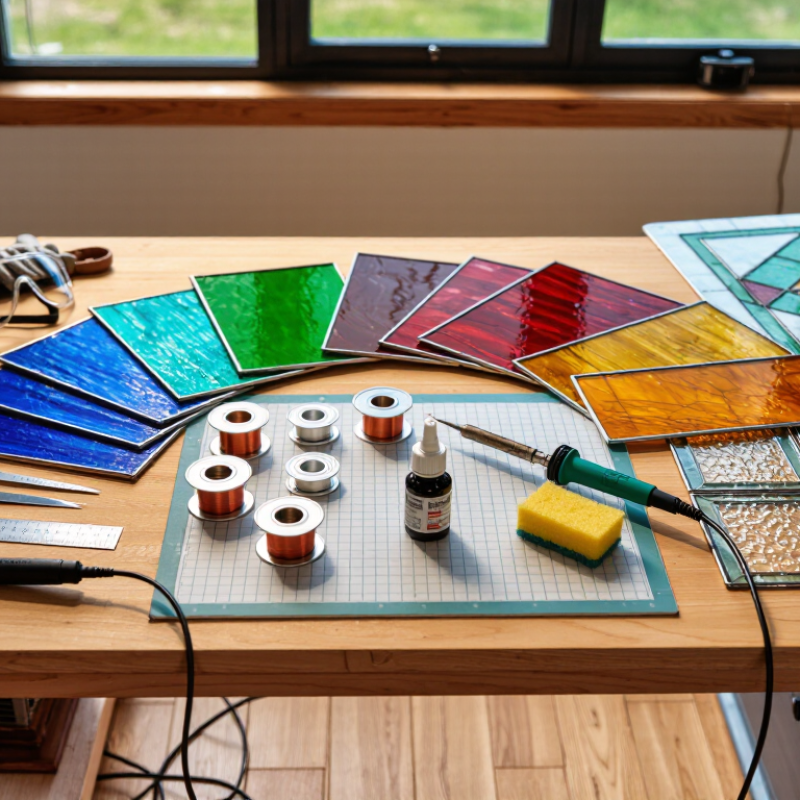
A stained glass window kit is a prepared set for building a small glass panel. Most kits include precut glass, copper foil, solder, flux, pattern paper, and basic instructions. Some also contain a glass cutter, grozing pliers, and a soldering iron. A grinder is often excluded, although it can improve accuracy around tight curves.
The best kit depends on your experience, workspace, and design goals. A beginner may need labeled glass pieces and a simple geometric pattern. An experienced maker may prefer loose materials and greater color control. Grand View Research valued the global decorative glass market at about $4.4 billion in 2022. Its report projected a 5.2% compound annual growth rate from 2023 to 2030. That growth reflects broader interest in decorative glass, not necessarily stained glass kits alone. This distinction matters. Marketing data can sound more specific than it is.
Tips: Choose a kit with safety glasses, clear soldering guidance, and compatible materials. Check the glass thickness before cutting. Work near ventilation, and keep food away from the bench. Wash your hands after handling flux. Never rush the soldering stage. Small mistakes remain visible. My practical preference is a modest pattern with six to twelve pieces. It teaches cutting, fitting, and patience without creating unnecessary waste. A kit may promise simplicity, but the first panel can still look uneven. That is part of learning.
Which Types of Stained Glass Kits Are Available?
What Is the Best Stained Glass Window Kit?
Stained glass kits usually fall into four types: copper foil, lead came, faux glass, and fused glass. Copper foil kits suit small panels, lamps, and geometric designs. They include scored glass, copper tape, flux, solder, and patina. Lead came kits use rigid channels. They create stronger panels but require more cutting accuracy. Faux stained glass kits use transparent paints or adhesive films. They are safer for children and renters, though the surface may look less dimensional. Fused glass kits contain compatible glass pieces for kiln firing. They need access to a kiln, which increases the real project cost.
Grand View Research valued the global arts and crafts market at about 44.9 billion dollars in 2023. Its report also projected strong growth through 2030. That figure includes many craft categories, not stained glass alone. Still, it reflects rising interest in hands-on projects. The U.S. Bureau of Labor Statistics’ 2023 American Time Use Survey also recorded arts and crafts activity among adults on an average day. Small projects remain practical for beginners.
For a first window, choose a copper foil kit with pre-cut pieces. Look for safety glasses, pattern paper, beginner solder, and clear instructions. A 20-centimeter panel is easier to control than a large scene. Check whether the glass is already cut. Some kits quietly omit tools, and that can double the budget. I still overbuy glass when testing colors. That mistake teaches something. Light changes blue glass dramatically near a window, so photographs can mislead. Test two or three pieces beside the intended light source before choosing the final kit.
How Do You Compare Stained Glass Window Kits?
What Is the Best Stained Glass Window Kit?
The best kit depends on your skill, workspace, and design goals. When I compare stained glass window kits, I check the glass thickness first. Uniform sheets usually cut more predictably. I also inspect the pattern, tools, soldering supplies, and instructions. A low price can hide missing essentials. Some kits include glass, but no reliable cutting tool. Others provide tools that feel awkward after several cuts. That difference matters.
Good instructions should show cutting angles, foil placement, solder control, and edge finishing. Clear diagrams help beginners avoid costly mistakes. Experienced makers may prefer a kit with fewer supplies and better materials. I once chose a detailed pattern that looked beautiful online. Its tiny pieces became frustrating on the workbench. The design was not wrong. My skill level was. This is worth considering before buying.
Tips: Compare the included tools with your existing equipment. Hold the glass near a window and check its texture. Avoid pieces with visible cracks or rough edges. Choose a pattern with manageable sections. Wear eye protection, keep the work area ventilated, and follow the kit’s safety guidance. A complete kit is not always the best kit. Reliable instructions, suitable materials, and realistic project size usually matter more than packaging. My own comparisons are still imperfect, because hand comfort and cutting ability vary from person to person.
What Is the Best Stained Glass Window Kit?
A practical comparison of common stained glass kit formats using a 1–5 suitability scale.
Traditional copper-foil kits are usually the most balanced choice for beginners because they support real glass cutting, shaping, soldering, and detailed designs. Lead-came kits are better suited to larger or more structural panels but require more experience. Faux-glass painting kits are the easiest and safest option, although they create a decorative finish rather than a traditional soldered stained-glass window.
How Do You Choose a Kit for Your Skill Level?
Choosing a stained glass window kit starts with an honest assessment of your hands-on experience. A complete beginner should seek pre-cut glass, numbered templates, copper foil, and a low-temperature soldering setup. These features reduce cutting errors and shorten the learning curve. Choose a simple geometric pattern, not a detailed botanical design.
Keep it manageable.
For learners with some glass-cutting practice, a kit with uncut sheets and a grinder offers better skill development. Check whether the instructions explain glass scoring, edge smoothing, foil application, solder control, and ventilation. The Association for Creative Industries reported that 63% of U.S. households participated in crafting during its 2020 industry statistics study. That participation suggests strong interest, but it does not guarantee technical readiness. Skill still matters.
Experienced makers can select kits with irregular shapes, layered textures, or lead came construction. Read the material list carefully. Some kits quietly exclude safety glasses, chemical-resistant gloves, or a stable work surface. A 2023 Grand View Research report valued the global arts and crafts market at approximately 44 billion U.S. dollars, showing broad market growth, yet larger demand does not always mean better instructions. I once chose a complex pattern too early and wasted several glass pieces. That mistake still influences my recommendations. A kit should challenge you slightly, not punish you for learning.









 Get a Free Quote
 See our Doors





 Start your estimate