How to Choose the Best Outdoor Lighting?
Outdoor Lighting does more than brighten a path. It can make steps easier to see, help guests find an entrance, and keep a patio comfortable after sunset. The best choice depends on how each area is used, not on brightness alone. A powerful fixture may create harsh glare. A modest, well-placed light can reveal the edge of a garden path.
Before comparing products, look at the space at night. Note dark corners, nearby windows, stairs, and areas reached by rain or sprinklers. Match each fixture to its purpose. Shielded path lights can mark walking routes. Focused lights work well near doors. Softer, warmer light can suit seating areas. Check the manufacturer’s lumen output, color temperature, weather-resistance rating, and installation instructions. These details offer a more reliable basis for comparison than appearance or wattage alone. Small details count.
This guide explains how to balance safety, comfort, energy use, and style when choosing Outdoor Lighting. It considers solar, low-voltage, and line-voltage options, along with timers and motion sensors. Site conditions can change the results. A solar lamp may work well in open sun but disappoint beneath a dense tree. That matters. No single setup suits every home. For hardwired installations or uncertain electrical conditions, consult a qualified professional and follow local requirements.
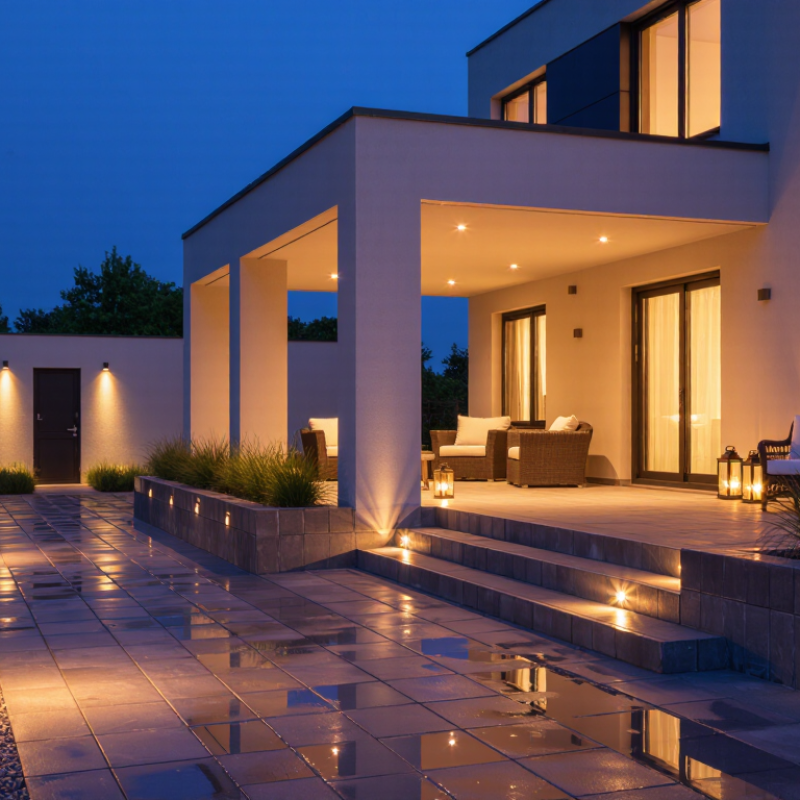
Define the Purpose and Lighting Needs of Each Outdoor Area
Before choosing fixtures, define what each outdoor area must do after dark. A front path needs clear edges and visible changes in height, not a bright beam in a visitor’s eyes. At an entry, light the lock and steps; at a patio, use softer, even light so faces remain easy to see. A garden may need only a few focused accents. Different tasks need different light.
Start with the people using each space, then note hazards, viewing angles, and nearby windows. This simple walk-through helps prevent glare and unnecessary spill. A 2016 Science Advances atlas by Falchi and colleagues estimated that more than 80% of the world’s population lived under light-polluted skies. That’s a reason to light only where needed, aim fixtures downward, and use controls such as timers or motion sensors. More light is not always better.
Tips: Walk each area at night and mark dark steps, confusing turns, and glare. Choose warm, shielded light where practical, then test it from standing and seated positions. It may take a second adjustment; the first layout is rarely perfect. Keep the goal modest: safe movement, useful visibility, and little wasted light.
Assess the Site, Layout, and Environmental Conditions
Begin with a slow walk around the property at dusk, then repeat it after dark. Note where people enter, pause, and change direction. Look for uneven steps, dark doorways, and paths hidden by shrubs. Measure key distances rather than estimating them. Small errors matter. Also notice light from windows, street lamps, and neighboring buildings, since it can change what needs illumination.
Sketch a simple layout and mark entrances, walkways, seating areas, and trees. Use focused light where people need to see a step or lock, and softer light for gathering spaces. Avoid aiming beams toward eye level or nearby windows. A temporary lamp can help test a location before installation. It may feel awkward to move it around, but that test can reveal glare a drawing misses.
Check the conditions each fixture will face. Is the spot exposed to rain, wind, salt air, or standing water? Choose fittings rated for that exposure, and consider how leaves or snow might block light. Mature branches can cast new shadows as they grow. No plan catches everything. Revisit the layout after a few evenings, and adjust brightness or placement where the space still feels unsafe or harsh. For electrical work, use a qualified professional and follow local requirements.
Compare Fixture Types, Brightness, and Light Color
How to Choose the Best Outdoor Lighting?
Compare fixture types, brightness, and light color before choosing outdoor lights. Wall fixtures work well beside doors and garages, where they brighten entry points. Path lights can guide visitors along a walkway, but too many may create a runway effect. Use lumens to compare brightness, not watts. A modest light may be enough for a small porch, while a broad driveway usually needs wider coverage. Check the beam direction, too; bright light aimed toward a neighbor’s window can feel harsh.
Tips: Sketch the area at night. Mark dark steps, doorways, and corners. Choose fixtures rated for outdoor exposure, and avoid aiming light into people’s eyes.
Light color changes how a space feels. Warm white, around 2700–3000 kelvin, often makes a porch feel relaxed and welcoming. Cooler white can help with visibility near work areas, though it may look stark against plants and wood. There is no perfect setting for every home. Even a careful plan can misjudge the effect, so test one fixture after dark before installing several. Notice shadows on stairs and whether colors look natural. A small adjustment to brightness or angle can make a bigger difference than adding another light.
How to Choose the Best Outdoor Lighting? - Compare Fixture Types, Brightness, and Light Color
| Fixture Type | Typical Brightness | Recommended Light Color | Best Uses | What to Consider |
| Path Lights | 100–300 lumens per fixture | 2700–3000 K for a warm, welcoming appearance | Walkways, garden borders, and driveway edges | Space fixtures evenly and aim light downward to guide people without creating glare. |
| Step Lights | 12–100 lumens per fixture | 2700–3000 K for a subtle, comfortable glow | Stair risers, retaining walls, and changes in elevation | Use low, shielded light to make steps visible while keeping the source out of direct view. |
| Wall Sconces | 300–800 lumens per fixture | 2700–3000 K for living areas; 3000–4000 K for a brighter utility area | Entryways, patios, garages, and exterior walls | Choose a shielded design and position it to illuminate the area without shining into windows. |
| Floodlights | 700–3000 lumens per fixture | 3000–4000 K for clear visibility | Driveways, yards, and broad security coverage | Use only as much output as needed. Motion sensors and adjustable aiming can reduce unnecessary light. |
| Landscape Spotlights | 200–700 lumens per fixture | 2700–3000 K for plants, trees, and architectural details | Accent lighting for trees, façades, and garden features | Use a narrow beam for specific features and aim carefully to avoid glare and light spill. |
| Post Lights | 200–800 lumens per fixture | 2700–3000 K for a softer residential setting | Driveway entrances, gates, and larger pathways | Match the brightness to the area and select a shielded fixture to direct light where it is useful. |
Selection tip: Lumens measure light output, while kelvins (K) describe color appearance. Lower kelvin values look warmer; higher values look cooler. Actual needs vary with fixture height, beam angle, surface reflectance, and ambient light.
Choose a Power Source and Weather-Resistant Materials
Choose a power source that suits the way you use the space. Hardwired fixtures provide steady light for paths and entrances, but installation may require a qualified electrician. Solar lights avoid wiring and work well in sunny, open areas. Cloudy weeks matter.
Battery-powered lights are useful where wiring is impractical, though batteries need regular charging or replacement. Check how long a fixture runs at your preferred brightness, not just its advertised maximum. Then consider access to an outlet, sunlight, and maintenance before deciding. There is no perfect option; a solar lamp under a dense tree can disappoint.
Outdoor materials face rain, dust, temperature swings, and sometimes salt air. Look for a clear outdoor-use rating and sealed joints around the lens and cable entry. Stainless steel, powder-coated aluminum, and quality outdoor plastics can resist corrosion, but finishes still wear over time. Keep connections raised from puddles, and inspect seals after harsh weather. One detail is easy to miss: a sturdy housing cannot protect a poorly placed fixture. A little planning helps.
Plan Fixture Placement, Controls, and Energy Use
How to Choose the Best Outdoor Lighting?
Plan fixture placement before choosing brightness. Walk the route after dark: note the porch step, uneven paving, gate latch, and the shadow beside the garage. Aim path lights downward and space them to overlap softly; bright gaps and glare can make steps harder to read. For a patio, place a shielded fixture above the table, not directly in seated guests’ eyes. Check the view from indoors, too. A light that looks subtle outside may reflect sharply in a window.
Controls shape daily energy use. Put entry lights on motion sensors where people arrive briefly, and use a timer or photocell for lights that need regular evening coverage. Adjust sensor range so passing cars do not trigger it all night. The International Energy Agency’s 2023 lighting overview estimates lighting uses about 15% of global electricity, making unnecessary operating hours worth addressing. Small change. A control still needs sensible settings and occasional checks.
Choose efficient, weather-rated LED fixtures, then compare the light they deliver rather than watts alone. The U.S. Department of Energy says LEDs use at least 75% less energy than incandescent lighting. That comparison is useful, but it does not settle every choice: color, shielding, and placement affect comfort. Test one fixture at night before installing several. I have found that the first layout often needs adjustment; a dark corner can remain dark even when the fixtures look bright on paper.


 Get a Free Quote
 See our Doors





 Start your estimate