The global window and door market is expanding, but French windows remain a specialized category. Grand View Research estimates the wider market reached approximately USD 207 billion in 2023, with continued growth expected through 2030. Other reports offer different figures and forecasts. That difference matters. French windows are rarely measured as a separate global segment.
For international buyers, the China Top 10 French Windows Manufacturers for Global Buyers should not be judged by catalog photos alone. Factory experience, thermal performance, drainage design, hardware quality, and export documentation deserve closer attention. Look for tested U-values, air-permeability results, water-tightness ratings, and evidence of compliance with applicable standards. A polished showroom may hide weak corner joints or inconsistent powder coating. Small details become expensive after installation.
Building scientist Joseph Lstiburek gives a useful warning: “Windows are a hole in the wall.” His statement is simple, but technically powerful. Every French windows supplier must control that opening against heat loss, wind-driven rain, noise, and forced entry. Reliable manufacturers should explain their profiles, glass configurations, gasket systems, and quality-control procedures clearly. Buyers should also verify production capacity, container-loading practices, warranty terms, and after-sales support.
This guide compares leading Chinese manufacturers through a practical purchasing lens. It considers product range, customization, certifications, project experience, and communication reliability. The ranking is not absolute. Regional climate, building codes, budget, and installation skill can change the final choice. That is where careful judgment still matters.
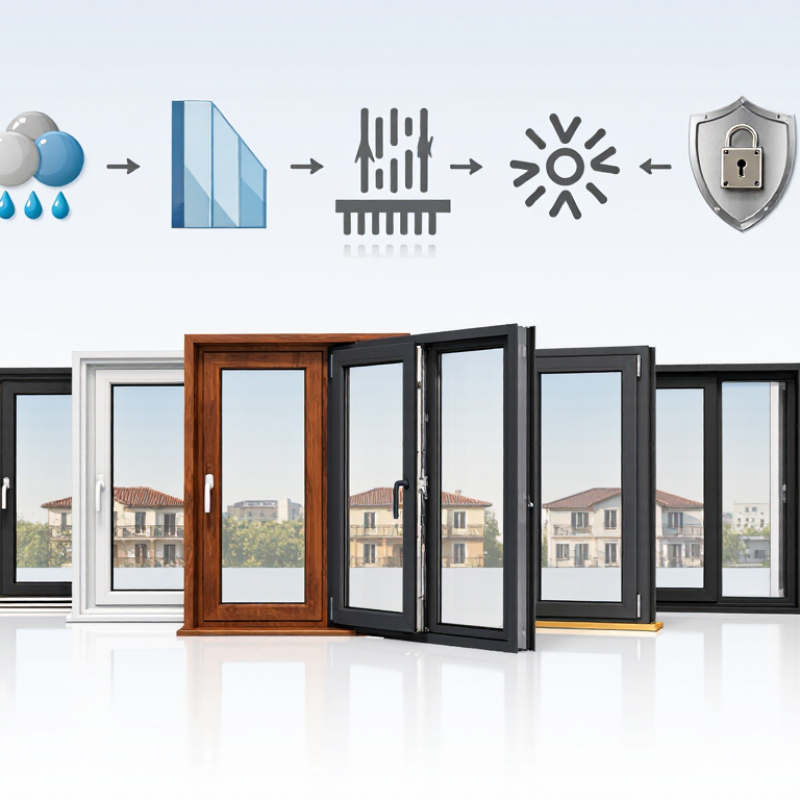
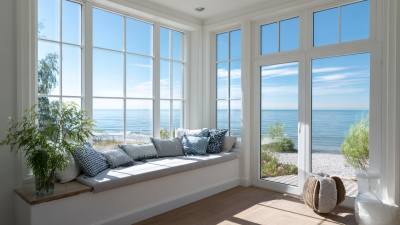
French windows are tall, glazed units designed to bring in more daylight and create a wider visual connection with outdoor spaces. They may open inward, outward, or combine fixed glass with movable panels. Their proportions often suit balconies, gardens, and narrow urban rooms.
China’s manufacturing landscape is broad, but quality varies between factories. Some facilities focus on aluminum profiles, while others specialize in thermal breaks, glass processing, or complete window systems.
Buyers should examine profile thickness, drainage paths, gasket compression, and hardware performance. A sample corner cut can reveal more than polished catalog images. Ask for test reports covering air leakage, water resistance, wind pressure, and thermal performance. Check whether those reports match the exact configuration being quoted.
Factory experience matters. A reliable supplier can explain lead times, coating durability, packaging methods, and replacement procedures without vague promises. Production lines with calibrated cutting equipment and documented inspections usually reduce size errors. Still, even a strong factory can miss details. Color batches may differ slightly. Installation tolerances are often underestimated. This deserves attention.
For global buyers, specifications should include opening direction, glass composition, frame finish, drainage design, and local compliance requirements. Clear drawings prevent costly assumptions. Independent pre-shipment inspection adds another layer of confidence, especially for large projects. China offers flexible customization and competitive production capacity, but informed comparison remains essential.
Selecting China’s top French window manufacturers requires more than comparing polished websites or low quotations. We examined production experience, product consistency, engineering support, and export readiness. Factory visits or video audits helped verify cutting equipment, powder-coating lines, glass assembly, and finished-window storage. These details reveal whether a supplier can repeat quality across large orders.
Technical capability was another key measure. We reviewed aluminum profile thickness, thermal-break design, drainage systems, hardware options, glass configurations, and air-tightness performance. Manufacturers with clear drawings and traceable material records earned stronger consideration. We also checked whether their products could be adapted to different climates, building methods, and project specifications. Samples were tested carefully. Small defects mattered.
Reliability included more than delivery promises. We considered communication speed, production schedules, packaging methods, inspection procedures, and support after shipment. References from overseas projects were useful, but not treated as final proof. A successful past order may not represent current performance. This is where the selection process remains imperfect. Supplier capacity can change, and sample quality may exceed mass production quality. For that reason, independent inspections, written specifications, and pre-shipment checks remain essential for global buyers. Each manufacturer was assessed against the same practical questions: Can it produce consistently? Can it document performance? Can it respond when problems appear?
China’s French-window sector serves residential, hospitality, and renovation projects worldwide. Grand View Research valued the global windows and doors market at about USD 207 billion in 2023, with continued growth expected through 2030. This demand rewards manufacturers that combine thermal performance, stable supply, and export documentation. The profiles below focus on practical capabilities rather than advertising claims.
Manufacturer 1 focuses on thermally broken aluminium frames for coastal buildings.
Manufacturer 2 specialises in uPVC profiles and multi-chamber insulation.
Manufacturer 3 produces slim steel-look French windows for modern apartments.
Manufacturer 4 supports large custom sizes and reinforced hinges.
Manufacturer 5 concentrates on timber-aluminium hybrid frames.
Manufacturer 6 offers low-threshold access solutions for elderly users.
Manufacturer 7 supplies fire-rated and acoustic configurations.
Manufacturer 8 serves hotel and villa projects with concealed hardware.
Manufacturer 9 develops recyclable aluminium systems with factory powder coating.
Manufacturer 10 provides flexible OEM production for distributors.
These differences matter more than factory size.
According to the International Trade Centre’s Trade Map, China remains a major exporter of aluminium and plastic building components, although product categories do not isolate French windows perfectly. Buyers should request EN 14351-1 test evidence, U-value calculations, air-tightness results, and salt-spray records.
Ask for corner samples, not only polished catalogues. A strong supplier explains glass thickness, gasket material, drainage paths, and replacement-hardware plans.
Some profiles may appear impressive but lack consistent batch control. That weakness deserves attention. Pricing also needs careful review, because installation losses and packaging damage can erase a low quotation.
China Top 10 French Windows Manufacturers for Global Buyers
Comparing French window manufacturers requires more than checking catalog photographs. In my sourcing experience, consistent quality begins with aluminum alloy thickness, corner joints, glass sealing, and hardware performance. Ask for production samples, not only digital drawings. Test each sash for smooth movement, tight closure, and visible frame distortion. A beautiful finish can still hide weak drainage design.
Certifications should match the destination market. Request valid reports for air leakage, water resistance, wind pressure, thermal insulation, and acoustic performance. ISO 9001 supports process control, but it does not prove every window performs well. CE documentation may help in some markets, while other regions require separate energy or safety testing. Verify the issuing laboratory and report dates carefully. Some paperwork looks convincing.
Price comparisons need equal specifications. Compare glass thickness, coating, thermal break depth, hardware grade, packaging, and warranty terms. The lowest quotation often excludes installation guidance or replacement parts. That gap matters. Customization is another key measure. Strong manufacturers can adjust colors, opening directions, glazing combinations, dimensions, screens, and coastal corrosion protection. However, excessive customization may increase lead time and create quality risks. Confirm approved drawings before production, and require a pre-shipment inspection with photographs and measured dimensions. Mistakes still happen, even with experienced teams. Clear records reduce the cost of correcting them.
China Top 10 French Windows Manufacturers for Global Buyers
When evaluating China’s top ten French window manufacturers, begin with documented performance, not attractive catalog images. The IEA’s Buildings 2023 report states that buildings consume about 30% of global final energy. Therefore, request U-values, air-tightness results, water-resistance tests, and acoustic data for the exact window system. Ask whether testing used the same glass, frame, and hardware shown in your quotation. Small differences matter.
Build a comparison sheet covering profile material, thermal breaks, glass thickness, hardware origin, minimum order quantity, lead time, warranty terms, and packaging. A low price can hide weak corner joints or poor protection during ocean transport. Request one production sample before approving a larger order. I would also inspect drainage holes, gasket compression, and locking alignment by hand. A spreadsheet still misses workmanship.
The World Bank’s Logistics Performance Index 2023 placed China 19th globally, with a score of 3.7, but logistics performance varies by factory location and forwarder. Confirm the loading port, export documents, Incoterm, carton dimensions, and insurance responsibility in writing. Use an independent pre-shipment inspection against approved drawings and tolerances. Payment should follow clear milestones, such as deposit, sample approval, inspection, and balance release. This is slower. It is usually safer. Ask suppliers for verifiable certifications and market-specific conformity evidence, because European, North American, and Middle Eastern requirements are not interchangeable. Always verify current rules with local professionals.
| No. | Evaluation Dimension | What Global Buyers Should Verify | Reliable Evidence or Document | Recommended Order Requirement | Suggested Weight |
|---|---|---|---|---|---|
| 1 | Product Standard Compliance | Confirm whether the window system is designed and tested for the target market, including air permeability, watertightness, wind resistance, thermal performance, and mechanical safety. | Applicable test reports, technical specifications, product drawings, and declarations required by the destination market. | State the required standard, performance class, testing method, and acceptance criteria in the purchase contract. | 15% |
| 2 | French Window Configuration | Review inward or outward opening direction, single or double sash design, glazing thickness, frame depth, drainage, hardware position, and available dimensions. | Approved shop drawings, section drawings, bill of materials, hardware schedule, and glazing specifications. | Approve a production drawing and sample before mass production; record all deviations in writing. | 12% |
| 3 | Material and Glazing Quality | Check frame material, alloy or profile grade, surface treatment, gasket type, spacer, glass composition, safety glass requirements, and color consistency. | Material certificates, coating specifications, glass configuration sheets, incoming inspection records, and approved color samples. | Define allowable color variation, glass tolerance, scratches, coating defects, and replacement responsibility. | 12% |
| 4 | Thermal and Energy Performance | Compare the declared U-value or thermal transmittance of the complete window, not only the glass, and consider the climate zone of the project. | Whole-window thermal calculations or test reports showing frame, glass, spacer, and installation assumptions. | Specify the required thermal target and test or calculation method in the technical schedule. | 10% |
| 5 | Factory Quality Control | Assess incoming-material inspection, process controls, dimensional checks, glass installation, hardware testing, final inspection, and traceability. | Quality manual, inspection checklist, corrective-action records, production photos, and an independent factory audit when appropriate. | Include pre-shipment inspection rights, defect classification, rework rules, and acceptance procedures. | 12% |
| 6 | Customization Capability | Verify the supplier's ability to handle non-standard sizes, special colors, different glass combinations, insect screens, restrictors, and project-specific accessories. | Previous technical drawings, prototype records, sample approval process, and confirmed production limitations. | Separate standard items from customized items and obtain written approval for every special configuration. | 8% |
| 7 | Lead Time and Production Capacity | Confirm sample lead time, mass-production lead time, daily or monthly capacity, peak-season constraints, and the supplier's ability to meet phased deliveries. | Written production schedule, capacity statement, raw-material procurement plan, and shipment history with sensitive customer information removed. | Set milestone dates for drawing approval, sample approval, production completion, inspection, and shipment. | 10% |
| 8 | Packaging and International Logistics | Evaluate corner protection, glass separation, moisture prevention, crate strength, container loading, carton marking, and damage-reporting procedures. | Packaging specification, loading plan, packing-list template, container photos, and insurance or damage-claim procedure. | Specify the agreed Incoterms rule, port, shipment documents, packaging standard, and responsibility for transit damage. | 8% |
| 9 | Commercial Terms and Landed Cost | Compare unit price together with tooling, sample, packaging, inland transport, freight, insurance, duties, taxes, installation accessories, and after-sales costs. | Itemized quotation, pro forma invoice, payment schedule, tariff classification information, and validity period of the offer. | Use a signed quotation and purchase order that clearly define currency, payment milestones, bank details, and change-order charges. | 8% |
| 10 | Warranty and After-Sales Support | Review warranty coverage for frames, finishes, glass, hardware, seals, and workmanship, together with response time and spare-parts availability. | Written warranty terms, installation and maintenance instructions, spare-parts list, service-contact procedure, and claims form. | Define warranty start date, exclusions, claim evidence, repair or replacement obligations, and maximum response time. | 5% |
| Total Evaluation Weight | 100% | ||||
Call us one of our 3 offices across Ontario, Canada
Thanks for contacting us!
We'll get back to you as soon as possible.