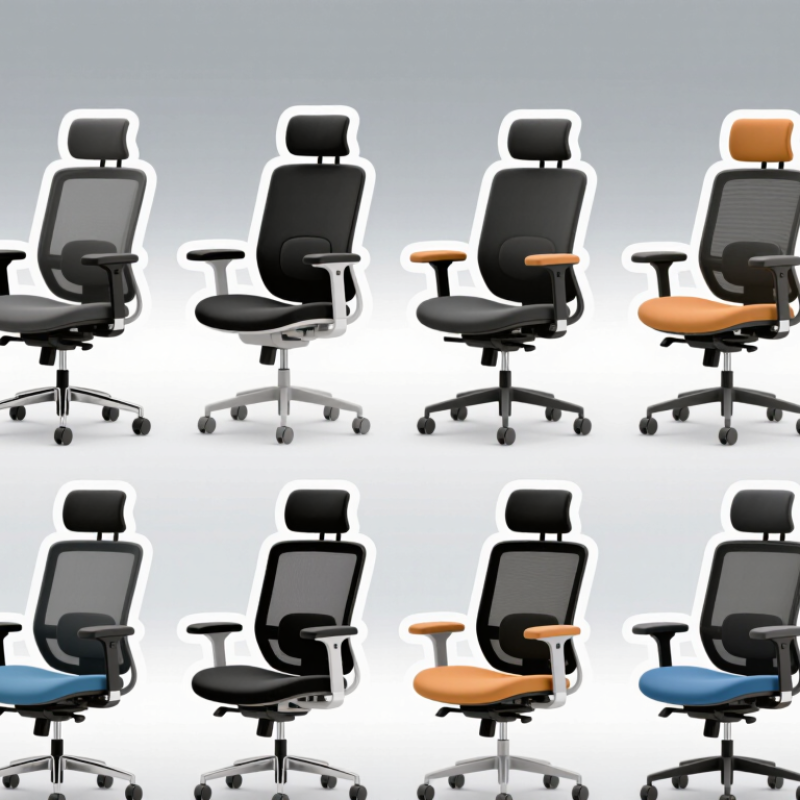
10 Best High Back Office Chairs for Global Buyers

A High Backed Office Chair can make long workdays feel steadier, but a tall back alone proves little. Seat depth, lumbar support, armrest adjustment, and breathable upholstery matter too. Small details count. A chair that looks generous in a product photo may feel cramped after an hour at a desk. Global buyers also compare dimensions, assembly needs, warranty terms, and delivery options across markets. Specs deserve a close read.

Ergonomics expert Dr. Alan Hedge is often associated with the reminder, “The best posture is your next posture.” That idea offers a useful lens for this guide: a supportive chair should allow comfortable movement, not hold every user in one fixed position. The ten picks below are considered for adjustability, build details, and practical fit, rather than appearance alone. Some models may suit broad shoulders yet miss the mark for shorter users. There is no universal winner. We also recognize that published specifications cannot replace trying a chair in person, and that is an imperfect part of any buying guide. Use the comparisons to narrow choices, then confirm measurements and local product terms before ordering.

10 Best High Back Office Chairs for Global Buyers

What Defines a High-Back Office Chair

A high-back office chair is defined by a backrest that supports more than the lower and middle back. It typically extends toward the shoulders and may include a headrest. The exact shape varies, so a tall silhouette alone does not guarantee useful support. What matters is whether the backrest follows the sitter’s posture and fits their body.

Look for lumbar support that can meet the curve of the lower back, plus a backrest that does not press awkwardly against the shoulder blades. A headrest is helpful only when its height and angle suit the user; otherwise, it can push the head forward. Small details matter. Seat depth, recline tension, and adjustable armrests also affect comfort during long work sessions. For global buyers, consider a range of user heights and local room conditions. Mesh may feel cooler in warm offices, while padded upholstery can feel softer. Still, neither material is automatically better. A chair can look impressive online and feel wrong after an hour.

Tips: Check the chair’s adjustment range, not just its overall height. If possible, test the recline and lumbar support while seated. Measure your desk and available floor space, too. These checks are easy to skip.

Key Features Global Buyers Should Evaluate

For a high-back office chair, evaluate fit before appearance. The U.S. Bureau of Labor Statistics reported that musculoskeletal disorders accounted for 27.3% of workplace cases involving days away, job transfer, or restriction in 2022. This does not prove a chair prevents injury, but it makes adjustability worth careful review. OSHA’s Computer Workstations eTool recommends a chair with adjustable height and back support. Check that users can rest their feet flat, keep their shoulders relaxed, and reach the desk without leaning forward. Fit matters more. A tall back should support the upper back without pushing the head forward; adjustable lumbar support helps accommodate different torsos.

Global buyers should compare seat depth, armrest range, recline tension, and weight capacity against the intended users, not just a product photo. A person should be able to sit back while leaving a small gap behind the knees. Test it seated. For shared offices, simple controls and replaceable parts can matter more than extra settings. Ask suppliers for durability-test documentation, applicable standards, spare-part availability, and warranty terms in each destination market. Upholstery also deserves scrutiny: dense padding may feel plush at first, yet trap heat during long shifts. A feature sheet can mislead. Where possible, assess a sample chair with users of different heights, then record what feels awkward; that step is easy to skip.

10 Best High Back Office Chairs for Global Buyers — Key Features to Evaluate

Check whether a chair’s seat can be adjusted to suit the user. These common ergonomic reference ranges are useful for comparing seat dimensions; they are not universal requirements or measurements of specific products.

Reference ranges: Cornell University Ergonomics Web, chair feature guidance. Inches converted to centimeters.

Ten High-Back Office Chairs for Different Needs

High-back chairs serve different bodies and work rhythms; height alone is not a useful buying guide. EU-OSHA reported in 2019 that about three in five European workers experienced musculoskeletal complaints. That figure covers many jobs and causes, not chairs alone, but it underlines why fit matters. OSHA’s workstation guidance recommends an adjustable chair with back support. Buyers should check seat-height range, lumbar adjustment, and whether the backrest supports the shoulders without forcing an awkward posture.

For long desk sessions, prioritize adjustable lumbar support and a recline mechanism that moves smoothly. Mesh backs may feel cooler in warm offices; padded backs can suit users who prefer a softer surface. Taller users should compare backrest height and seat depth, while compact users need a seat that does not press behind the knees. Shared workspaces benefit from simple controls. Heavy-duty models should be assessed against stated capacity and test documentation, not appearance. Conference rooms may need firmer cushioning and fewer adjustments. A headrest can help some reclined users, but it is not essential for everyone. Small detail, real difference. Even a well-built chair can disappoint if its armrests prevent close desk access. Test the chair for several minutes, then reassess posture after a full workday; showroom comfort is not the whole story.

10 Best High-Back Office Chairs for Global Buyers — Ten High-Back Office Chairs for Different Needs

This brand-neutral guide compares chair types rather than specific products. Dimensions are approximate ranges commonly found in office seating; actual measurements and adjustment ranges vary by model and market.

Chair Type Best For Back Support Common Adjustments Typical Seat Dimensions Common Materials Main Advantage Consider Before Buying
Ergonomic Mesh High-Back Chair Daily desk work in warm or humid environments Full-height mesh back, often with adjustable lumbar support Seat height, tilt tension, recline lock, arm height; some models add seat depth adjustment Seat height: about 42–55 cm; seat width: about 48–52 cm Breathable mesh, molded foam seat, metal or reinforced polymer base Airflow through the back can improve comfort during long sitting periods Mesh tension and lumbar fit differ; check the support shape and replacement-part availability
High-Back Chair with Adjustable Headrest Buyers who recline periodically or want additional neck support Tall back with a height- or angle-adjustable headrest Seat height, recline, tilt lock, arm height, and headrest position Seat height: about 42–55 cm; seat width: about 48–53 cm Mesh or fabric upholstery, foam cushion, metal or polymer frame Headrest positioning can support the head during a reclined posture A headrest is most useful when its position suits the user; it is not a substitute for correct desk setup
Executive High-Back Chair Private offices, meeting rooms, and users who prefer a padded seat High, upholstered back with broad contact areas Usually seat height, recline, and tilt tension; arm adjustment varies Seat height: about 43–56 cm; seat width: about 50–56 cm Fabric or coated upholstery, foam padding, metal or polymer base Generous padding and a formal appearance Thicker upholstery may retain more heat; confirm cleaning instructions and chair dimensions
Task Chair with High Back and Lumbar Adjustment Focused computer work and shared office workstations Contoured back with adjustable lumbar support Seat height, lumbar position, tilt tension, recline lock, and sometimes seat depth Seat height: about 40–54 cm; seat width: about 46–51 cm Mesh or woven fabric, molded foam, steel or reinforced polymer components Practical adjustment options in a work-oriented design Check that the lumbar support can be positioned comfortably for the intended user
Big-and-Tall High-Back Chair Users needing a wider seat or a higher stated load rating Broad, tall back with a reinforced frame on some models Seat height and recline; arm width or arm height may be adjustable Seat height: about 45–58 cm; seat width: about 52–60 cm Reinforced metal components, foam padding, fabric or coated upholstery Wider seating can provide more room than standard task-chair designs Compare the published load rating, seat width, and usable seat depth for each model
Compact High-Back Chair Small home offices, narrow desks, and limited floor space Tall back on a relatively small overall frame Typically seat height and tilt; armrests may be fixed or removable Seat height: about 40–52 cm; seat width: about 44–49 cm Mesh or fabric, compact foam seat, polymer or metal base Uses less floor space than many full-size executive chairs Check seat width, arm clearance, and chair footprint against the desk and user
High-Back Chair with Adjustable Seat Depth Workplaces serving users with different leg lengths High back with lumbar support; sliding seat pan on adjustable models Seat height, seat depth, recline, tilt tension, and often arm height Seat height: about 41–55 cm; seat width: about 47–52 cm Mesh or fabric back, foam seat, metal or reinforced polymer structure Seat-depth adjustment can help users maintain comfortable space behind the knees Confirm the adjustment range and that the controls are easy to reach
High-Back Chair with 3D or 4D Armrests Users who need to position arm support around different desk setups High back with adjustable lumbar support on many models Seat height, recline, tilt, and armrests that move in multiple directions Seat height: about 41–55 cm; seat width: about 47–53 cm Mesh or fabric, padded seat, polymer arm pads, metal or polymer base More armrest positioning options can help match desk height and working posture Check that the armrests fit under the desk and do not obstruct close approach
Upholstered Fabric High-Back Chair Cooler rooms, shared offices, and users who prefer a soft-touch finish Fully or partly fabric-covered back with padded support Usually seat height and recline; lumbar and arm adjustments vary Seat height: about 42–55 cm; seat width: about 47–53 cm Woven fabric, foam padding, metal or polymer frame Fabric offers a softer feel and a wide range of neutral finishes Review cleaning requirements and fabric durability for high-use environments
High-Back Chair with Synchronous Tilt Users who change posture throughout the working day High back that reclines in coordination with the seat on synchronous mechanisms Seat height, tilt tension, recline range or lock, and often arm height Seat height: about 41–55 cm; seat width: about 47–52 cm Mesh or fabric, foam seat, metal mechanism, reinforced base Coordinated seat-and-back movement supports posture changes while reclining Mechanism feel and adjustment controls vary; verify the operating instructions and warranty terms

How the Chairs Compare in Comfort and Function

High-back office chairs differ less by appearance than by how their support feels through a full workday. A taller back can steady the shoulders, but it cannot fix a seat that presses behind the knees. Compare lumbar adjustment, recline tension, seat depth, and armrest range together. More controls may suit shared desks, while simpler mechanisms can be easier to adjust. Comfort is personal. A firm cushion may feel supportive to one person and unforgiving to another after long calls.

Tips: Sit with feet flat and shoulders relaxed. Check whether the lumbar support meets your lower back without forcing an arch. Test the recline, too; a smooth movement matters more than a long list of settings.

For global buyers, compare published dimensions, assembly requirements, upholstery, and delivery options before choosing. Breathable fabric can feel cooler during warm days, while easy-to-clean surfaces may suit busy workspaces. Verify the chair’s stated load capacity and return terms, since specifications and service coverage can vary by market. One trade-off is easy to miss: a generous backrest may feel reassuring, yet its shape or width may not suit every body. If possible, test the seat for more than a few minutes.

How to Select a Chair for Your Workplace and Region

Choosing a high-back office chair starts with the person, not the silhouette. Measure the user’s seated height, hip width, and thigh length, then compare these with seat height, width, and depth. Fit varies by region. Where several body sizes share one chair, adjustable seat depth and lumbar support matter more than a tall backrest. A headrest can look reassuring, yet still miss the user’s neck.

The World Health Organization’s 2023 low back pain fact sheet estimates 619 million cases worldwide in 2020. That figure does not prove a chair prevents back pain; it does show why comfort and movement deserve attention.

Ask users to sit for a realistic trial, with feet supported and shoulders relaxed. Small details matter. Check local standards too, such as ANSI/BIFMA X5.1 in North America and EN 1335 in Europe, while confirming the exact product’s documentation.

Workplace conditions change the choice. In warm or humid climates, breathable upholstery may feel better during long shifts; in cooler offices, a more padded surface may suit some users. Check floor type, desk clearance, delivery access, and local replacement-part availability before ordering. EU-OSHA’s 2022 OSH Pulse survey found that 30% of workers reported a health problem caused or worsened by work. That broad figure is not chair-specific. Still, it is a reason to ask staff what actually feels uncomfortable. A standard size can pass inspection and fit poorly.