Choosing a reliable Galvanized Steel Plate Supplier is not simply a matter of comparing prices. Steel plates may look similar on a screen, yet their performance can differ sharply after cutting, welding, transport, and outdoor exposure. Zinc coating thickness, base-steel chemistry, surface consistency, and dimensional tolerance all deserve close attention.
Dr. Gregory Zhang, a recognized specialist in galvanized steel technology, has explained, “Zinc protects steel through both barrier protection and sacrificial action.” This principle remains practical. A dense zinc layer can shield a plate from moisture, while zinc can continue protecting exposed edges through electrochemical action. The result depends on manufacturing control.
This guide examines ten leading suppliers worldwide through a buyer’s lens. It considers production capacity, hot-dip galvanizing practices, quality certifications, export experience, inspection procedures, and delivery reliability. Some suppliers serve major infrastructure projects. Others perform better for smaller, customized orders. That difference matters.
No ranking is perfect.
A supplier with excellent mills may still offer slow communication. Another may provide fast delivery but limited technical documentation. Buyers should request mill test certificates, coating measurements, sample photographs, and clear packaging details before placing substantial orders. Port distance also matters. A low factory price can lose its advantage through freight delays, damaged corners, or unsuitable packing.
The following selection is designed to support practical comparison, not to replace independent verification. Market conditions change. Supplier performance can vary by region, order size, and specification. That uncomfortable detail deserves attention. Reliable sourcing requires evidence, careful questions, and a willingness to reconsider the first attractive quotation.
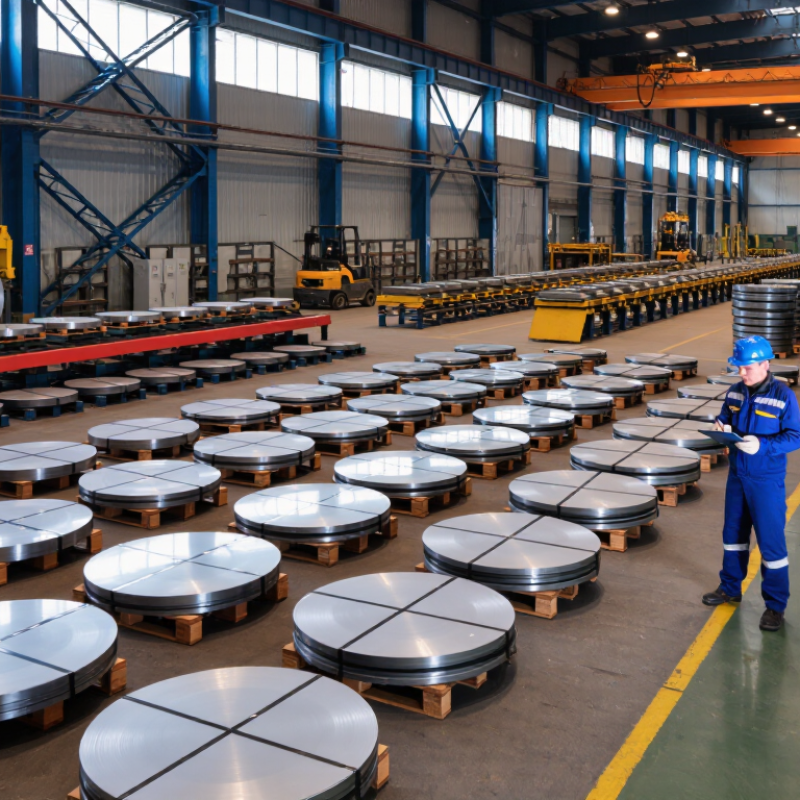
Galvanized steel plate is carbon steel protected by a zinc coating. The zinc creates a barrier and offers sacrificial protection when scratches expose the underlying steel. That matters on roofs, drainage channels, agricultural equipment, bridges, and outdoor frames. A zinc surface may also develop a thin protective patina, reducing corrosion in ordinary atmospheres.
Scale makes material quality important. World Steel in Figures 2024 reports 1.892 billion tonnes of crude steel production in 2023. Even a small failure rate can create significant repair costs.
Guidance from the European General Galvanizers Association indicates that galvanized coatings can remain effective for decades, depending on coating thickness and exposure. Rural environments often provide longer service than coastal or heavily industrial areas. The difference can be substantial.
Look closely at supplier evidence. ISO 1461 provides requirements for hot-dip galvanized coatings, including coating appearance and thickness. However, a certificate does not replace inspection.
Measure coating thickness, check plate flatness, and confirm the steel grade before shipment. Cut edges deserve attention because they may corrode sooner in aggressive conditions.
White rust can appear during damp storage; it is not always structural damage, but careless handling can worsen it. Salt-spray results can help comparison, yet they do not perfectly represent real weather. That limitation is easy to overlook. Reliable purchasing combines test reports, traceability, dimensional checks, and practical experience.
Choosing among the 10 best galvanized steel plate suppliers worldwide requires more than comparing prices. A polished website proves little. Request mill certificates, coating weight records, and recent test reports for each proposed grade. Check whether the documents match the actual plate thickness, width, and production batch.
Ask suppliers to explain their zinc coating process in practical terms. Reliable teams should discuss surface appearance, adhesion, edge quality, and dimensional tolerance without vague promises. Request samples with visible markings and measure them independently. A coating that looks bright may still be uneven. Small differences can affect forming, welding, and service life.
Traceability matters when several containers arrive months apart. Confirm heat numbers, inspection points, packing methods, and replacement procedures before placing an order. I have found that clear answers often reveal more than low quotations. Ask how they handle salt-spray testing, damaged corners, and delayed shipping. Their response shows operational experience.
Communication deserves a separate check. Can the supplier provide consistent technical replies across sales and quality staff? Can they explain unfamiliar requirements in plain English? One overlooked detail may be my own assumption about local standards. That deserves verification, not confidence. Compare lead times using the same specifications, then review payment terms and pre-shipment inspection options carefully. Reliable supply is built through evidence, not attractive promises.
| Rank | Anonymized Supplier Profile | Primary Supply Region | Applicable Product Standards | Typical Coating Range | Typical Thickness Range | Common Steel Grades | Quality Documents to Request | Typical Export Readiness | Best-Fit Applications | Evaluation Score |
|---|---|---|---|---|---|---|---|---|---|---|
| 1 | Large integrated flat-steel producer | East Asia | ASTM A653/A653M; EN 10346; JIS G3302 | Z100–Z350 g/m² | 0.30–3.00 mm | Commercial, forming, and structural grades | Mill test certificate, coating test, dimensional report, inspection record | Very high | Automotive parts, construction panels, industrial fabrication | 9.2/10 |
| 2 | Certified regional coil-and-sheet mill | Western Europe | EN 10346; ISO 9001 quality systems | Z100–Z275 g/m² | 0.40–2.50 mm | DX51D, DX52D, S250GD, S350GD | EN 10204 3.1 certificate, chemical analysis, coating mass report | Very high | Roofing, cladding, profiles, light structural work | 9.0/10 |
| 3 | High-volume export coil supplier | East Asia | ASTM A653/A653M; JIS G3302; EN 10346 | Z60–Z350 g/m² | 0.25–3.20 mm | Commercial, drawing, and structural grades | Mill certificate, third-party inspection, packing list, weight note | Very high | Large construction projects and service-center distribution | 8.8/10 |
| 4 | North American specification-focused mill | North America | ASTM A653/A653M; ASTM A924/A924M | G30–G235 coating designations | 0.40–2.70 mm | CS, FS, DDS, HSLAS, structural grades | ASTM-compliant test report, tensile data, coating designation report | High | Building systems, HVAC, appliance, and structural components | 8.7/10 |
| 5 | Australian structural-sheet supplier | Oceania | AS 1397; relevant ASTM or EN equivalents by order | Z100–Z450 g/m² | 0.30–3.00 mm | G250, G300, G350, G450 structural grades | AS 1397 test certificate, coating mass report, mechanical properties | High | Rural buildings, structural framing, fencing, roofing | 8.5/10 |
| 6 | Middle Eastern project-stock supplier | Gulf and Middle East | ASTM A653/A653M; EN 10346 | Z120–Z350 g/m² | 0.40–2.00 mm | Commercial and structural grades | Certificate of origin, mill certificate, inspection certificate, packing details | High | Warehousing, ducting, roofing, and infrastructure projects | 8.3/10 |
| 7 | South Asian value-oriented producer | South Asia | IS 277; ASTM A653/A653M; EN 10346 | Z80–Z275 g/m² | 0.30–2.50 mm | Commercial, drawing, and structural grades | IS or ASTM test certificate, chemical composition, coating test, inspection report | Medium to high | General fabrication, roofing, agricultural equipment | 8.1/10 |
| 8 | Latin American domestic-and-export supplier | Latin America | ABNT NBR 7008; ASTM A653/A653M | Z100–Z350 g/m² | 0.35–2.65 mm | Commercial, forming, and structural grades | ABNT or ASTM certificate, tensile test, coating mass and dimensional reports | Medium to high | Construction, agricultural structures, and regional distribution | 7.9/10 |
| 9 | Independent service-center stockholder | Multi-region distribution network | Standard depends on source mill; ASTM, EN, JIS, or AS documents may apply | Commonly Z100–Z275 g/m² | 0.40–3.00 mm | Commercial and forming grades; structural grades by availability | Original mill certificate, traceability record, weighing report, inspection option | High for stocked items | Small and medium orders, cut-to-length requirements, urgent replacement stock | 7.7/10 |
| 10 | Specialized processor and cut-to-size supplier | Global sourcing with regional processing | Customer-specified ASTM, EN, JIS, AS, or equivalent requirements | Z100–Z350 g/m², subject to source material | 0.40–3.00 mm | Commercial, forming, and structural grades | Source mill certificate, processing inspection report, dimensional report, traceability data | High for processed orders | OEM components, precision blanks, fabricated assemblies, and low-volume projects | 7.6/10 |
Ten Leading Galvanized Steel Plate Suppliers Worldwide
Selecting leading galvanized steel plate suppliers requires more than comparing prices. Buyers should examine coating weight, tensile strength, thickness tolerance, delivery records, and testing documents. In practical purchasing, a clear mill certificate often matters more than a polished website. Samples help, too.
A strong worldwide shortlist includes a large East Asian integrated mill known for high-volume production, a Japanese producer valued for precise surface quality, and a South Korean supplier with dependable automotive grades. European options may include a German manufacturer with strict process control, an Italian producer serving construction projects, and a Nordic mill recognized for corrosion-resistant products. North America contributes a major Canadian supplier and a United States producer with broad service-center coverage. India offers a competitive high-volume manufacturer, while a Turkish supplier can provide flexible regional delivery.
Experience shows that “best” changes with the project. A roofing buyer may prioritize coating thickness and appearance. An infrastructure contractor may need heavier gauges, traceability, and consistent weldability. Ask for test reports.
Do not trust claims alone. Check recent batch data, packaging photos, port arrangements, and customer references. Some suppliers communicate well but struggle with delivery during peak demand. Others offer excellent steel yet respond slowly to technical questions. That difference can become expensive. Supplier rankings also need review, because capacity, energy costs, and export conditions change.
Choosing the 10 best galvanized steel plate suppliers worldwide requires more than comparing online prices. Quality begins with steel chemistry, zinc coating thickness, surface uniformity, and dimensional accuracy. Ask for mill test certificates, coating inspection reports, and traceability records. A reliable supplier should clearly identify applicable standards, such as ASTM, EN, or JIS requirements.
Check the coating. The surface should look even, not excessively dull, blistered, or heavily scratched. Ask whether plates meet standards such as ASTM A36, ASTM A653, or EN 10346, depending on the project. ISO 9001 certification can support process control, but it does not replace independent inspection. Experienced buyers should request samples, bend-test results, and recent batch photographs before placing large orders.
Pricing needs a wider view. Compare the base price, zinc coating grade, cutting fees, packaging, export documentation, insurance, and freight. The cheapest quotation may hide higher losses from warping or late delivery. Delivery reliability depends on production capacity, port access, weather planning, and honest lead times. Confirm plate sizes, bundle weights, loading photos, and arrival procedures in writing. My comparison remains imperfect because market prices change quickly. Some suppliers communicate well but provide weaker technical evidence. Others offer excellent certificates but limited flexibility. A careful buyer should score quality, standards, total cost, and delivery performance separately before choosing.
Global benchmark of commonly specified structural steel grades used as substrates for galvanized plate
The chart compares published minimum mechanical properties for widely used structural steel grades: yield strength and minimum tensile strength. Values are shown in MPa and may vary with plate thickness, product form, and the applicable edition of each standard. Galvanizing quality, coating mass, pricing, lead time, and delivery performance must be verified from each supplier’s mill certificates, coating designation, quotation, and logistics terms.
Reference standards: ASTM A36/A36M, EN 10025-2 S275JR, JIS G3101 SS400, GB/T 700 Q235B, and AS/NZS 3678 Grade 250. Mechanical values are representative minimum requirements for common thickness ranges.
Choosing the right galvanized steel plate supplier requires more than comparing prices. Start with the coating standard, steel grade, plate thickness, and delivery tolerance. ISO 1461 defines requirements for hot-dip galvanized coatings, but project conditions still matter. Ask suppliers for recent mill certificates, coating test results, and traceable batch numbers.
Production scale can affect availability. The World Steel Association reported approximately 1.89 billion tonnes of crude steel production in 2023. That figure shows a huge market, not consistent quality. For outdoor structures, request corrosion guidance based on humidity, salt exposure, and maintenance access. The American Galvanizers Association reports that galvanized steel can provide decades of protection in many atmospheric environments, though service life changes sharply by location.
Tips: Compare at least three written quotations. Check whether freight, cutting, testing, and packaging are included. Request sample documents before placing a large order. A supplier with slower communication may create costly delays. That detail is easy to underestimate.
Visit the production site when possible. Inspect plate edges, surface uniformity, marking, and packaging. Confirm the supplier’s experience with your required grade and destination standards. Payment terms also deserve attention; unusually low pricing may hide thinner coatings or weaker documentation. I would not rely on a polished certificate alone. Independent inspection can expose small inconsistencies before they become structural problems. Recheck the specification. Mistakes often begin there.
Call us one of our 3 offices across Ontario, Canada
Thanks for contacting us!
We'll get back to you as soon as possible.